





If a jeep pulls to the left or right while driving, it cannot be ignored. It makes steering more difficult and can indicate tyre or wheel problems, suspension or steering issues. Knowing what is causing the failure early will prevent such uneven wear and loss of control of the tyre.
This can be caused by wrong tyre pressure, misaligned wheels, uneven tyre wear, jammed-up brake components, worn suspension parts, or steering issues.
If the Jeep continues to move to one side after basic checks, a professional Jeep service in Mussafah can inspect the vehicle and find the actual cause.
Main Reasons Why a Jeep Pulls to One Side While Driving
1. Unequal Tyre Pressure
One of the simplest is checking the tyre pressure when a Jeep pulls to one side. When one front tyre is under-inflated, it can result in varying degrees of grip and rolling resistance.
This can force the car towards the side with the lower pressure. When tyres are cold, use a good quality pressure gauge to check all four pressures. Compare the readings with the pressure listed in your Jeep’s owner’s manual or door sticker.
Check for slow leaks in tyres as well. If there is no other problem, correcting the pressure might resolve the issue.
2. Wheel Alignment Problems
Wheel alignment influences the way tyres are fitted and rolling on the roads. Over time, the alignment angles can change due to hitting potholes, kerbs, or rough roads. Under these circumstances, your Jeep might even pull to one side while you are steering it straight.
Also, if there is poor alignment, the steering wheel will tend to be angled while driving. Another frequent warning is worn tyres.
If these symptoms are noted, an alignment check will be able to indicate if the wheels are in the correct position. Addressing alignment issues will help to provide better straight-line driving and to help even tire wear.
3. Uneven or Damaged Tyres
Tyres wear out unevenly at times. The tread on one tyre can be more worn than the other, or there may be an uneven wear pattern. Damage to the internal parts of the tyre may also cause vehicle handling issues.
If a tyre is bulging, has deep cuts or any form of irregular shape, it needs to be inspected immediately. Look at the tyres, cross-check the tread width on all tyres, and compare the front tyres.
When one tire is worn more than the other, the Jeep can experience steering feedback as if it’s going ahead by itself. Worn or damaged tyres could be a cause of bad handling, and replacement will help restore it.
4. Brake Caliper Problems
If a brake isn’t releasing, it can cause the Jeep to pull towards it. Sticking brake calipers can cause brake pad pressure to remain on the brake pads without any input on the brake pedal. This causes the one wheel to be much hotter than the other and provides additional resistance.
Sometimes there is a burning odor, loss of fuel economy, or odd sounds coming from the compromised wheel. After driving, don’t touch a wheel as it could be very hot. Before continuing to drive normally, have the braking system checked if a brake feels sticky or is sticking.
5. Worn Suspension Components
The suspension keeps the Jeep stable and ensures that the tyres stay on the road. A control arm bush, ball joint, tie rod end or shock absorber may be worn and cause the vehicle to go off course.
A damaged suspension can cause a Jeep to swerve to one side, particularly when braking or on rough surfaces. You might also experience knocks or find that the car is less stable.
If they are not addressed on their own, suspension problems can escalate. Inspection is important to determine loose, worn, or damaged parts and to prevent further handling problems.
6. Steering System Issues
Issues with the steering system can also lead to a Jeep veering from a straight driving position. Tie bars, steering joints, or other steering components that are worn can allow unnecessary play between the steering wheel and wheels.
Loose steering, odd sounds, or a steering wheel that doesn’t come back to center after turning may be noticed. These symptoms are not to be considered wear.
Steering parts are directly involved in controlling the vehicle, and if it starts moving in an unusual way, then it’s worth taking a look at. When driving the Jeep, watch for signs of poor handling. Do not drive at high speeds and schedule a professional inspection as soon as possible.
7. Road Surface Can Make Your Jeep Move
However, not all pulls indicate a mechanical problem in your Jeep. Rainwater is frequently directed away from the road by constructing roads slightly inclined. Sometimes this gradient can cause a car to tilt slightly towards one side.
A tall vehicle like a Jeep can also be impacted by strong wind, particularly on open roadways or highways. Test the car on another level road and check if the pull is the same.
However, when the Jeep pulls hard on multiple roads, it is more likely that the issue is caused by tyres, alignment, brakes, steering or suspension.
8. Wheel and Tyre Balance Issues
While wheel balancing is not the same thing as wheel alignment, it can impact driving comfort as well. When the wheel is not balanced, shaking or vibration may occur at higher speeds. An unbalanced weight around a wheel can also cause the Jeep’s balance to be off in some instances.
Balance issues can occur due to the loss of wheel weights, tyre changes, or uneven tyre wear. If your Jeep pulls to one side and the steering wheel vibrates also, have both wheel alignment and wheel balancing performed.
A technician can check the wheels and add weights to any wheel if necessary to make the wheels run smoothly.
9. Check for a Stuck or Damaged Wheel Bearing
A wheel bearing is used to allow the wheel to rotate smoothly. If a bearing wears or is damaged, it can cause noise, vibration, or abnormal wheel motion. In some instances, the off-road vehicle may feel less stable when on the road.
If you hear a humming or grinding noise that affects your turn, that could be a warning sign. Wheel bearing issues are not something to be ignored, as they can lead to serious damage that can hinder the safe movement of the wheel.
When it is accompanied by pulling and/or vibration, inspect the wheel and bearing for a new noise. Repairing early may help to avoid further damage.
How to Find the Real Cause?
The following is a series of steps for identifying the cause of a pulling Jeep that can be performed with easy, basic tests, and then can be repeated in a thorough inspection when necessary. Start with tyre pressure and condition, as this is easy to do. If the tyres are OK, check alignment, brakes, steering and suspension.
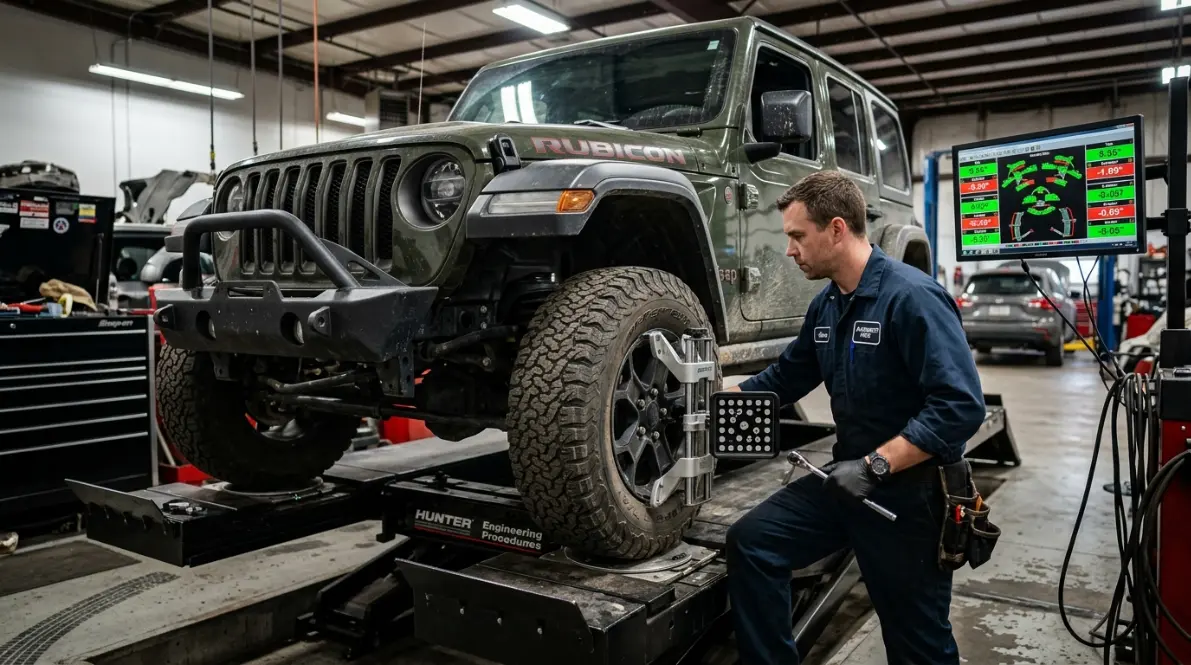
A technician can place the vehicle on suitable equipment to check the alignment angles and inspect parts for wear. It is better to find the actual fault than to replace parts based only on symptoms. Professional Jeep service Mussafah can help diagnose the issue and recommend the correct repair.
When Should You Stop Driving Your Jeep?
A slight pull can be due to tyre pressure and/or road slope, but a strong pull or sudden pull requires more attention. If the steering is becoming difficult, the Jeep is pulling, the steering wheel is vibrating, the steering wheel is hot, or you can hear smoke and burning noises, or a hot wheel, stop driving the vehicle and arrange an inspection.
These symptoms can indicate brake, tyre, steering and suspension issues. If the car doesn’t feel safe, don’t drive at high speeds. Early diagnosis can minimize repair expenses and save the lives of other road users.
Final Thoughts
A Jeep can go sideways for numerous reasons, ranging from even a difference in tyre pressure to issues with alignment, brakes, suspension, steering, and wheel bearings. Begin with simple tyre tests, and if it persists, do not ignore the issue.
With a proper inspection, you can discover hidden flaws and prevent the issue from impacting your safety or causing additional damage. Routine upkeep ensures that the steering and suspension are well-maintained as well.
When basic troubleshooting fails to resolve the issue of your Jeep not pulling, schedule Jeep maintenance services in Mussafah to find the cause of the problem and get your Jeep back on the road.
Also Explore: Emarat Bin Hendi: Services, Location, Facilities & Visitor Guide