


The “best” time to visit depends largely on where you are visiting in Pakistan, as the country has ranges that run from sea level to above 8,000 meters. Optimal visit dates for Hunza in autumn may be extreme heat in Karachi and dates for the spring in Lahore could fall during landslides on the Karakoram Highway. Determining the right window involves knowing the season and the region of the world that you will be visiting.
The Short Answer
The best period of the year in general is March through May or September through November. In these shoulder seasons, the lowland cities have mild weather, while the mountain valleys have stable weather without the extreme heat of the plains in the summer or the snow-covered passes in the winter. Early autumn is typically the best time of the year to travel between north and south Pakistan if one trip is required.
Visiting the Northern Areas: Hunza, Skardu, and Gilgit-Baltistan
The mountain-riddled north with the Karakoram Highway, Hunza and Skardu is ideal for April-October visits. Higher passes such as Babusar and Shandur are usually closed by snow until late May and those intending to make the whole loop of Chitral or Gilgit should wait till early summer. The warm weather and sunny skies make for some excellent trekking in July and August to reach K2 base camp or Fairy Meadows on the way down to Nanga Parbat.
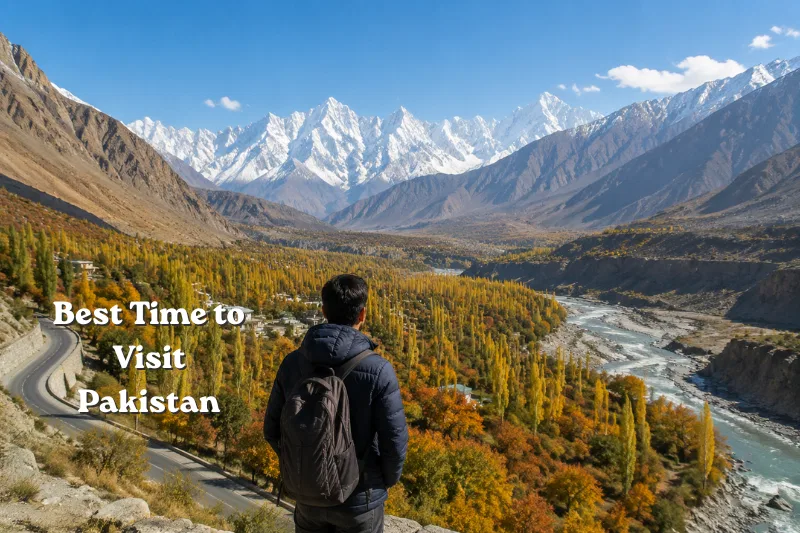
October is probably the best month of the year for the north. The orchards of Hunza change colour to gold and red, the daytime temperatures are still in the teens and low twenties Celsius and the number of visitors to guesthouses in July is relatively low. The season from December to February brings snow to the area and many roads become impassable, but if you are a few courageous travellers, there are still some roads to brave and some snowy shooters who visit Skardu during the winter season for winter photography.
Visiting the Punjab Plains: Lahore, Islamabad, and Multan
Lahore, Islamabad and Multan are in a totally different climatic zone and summer here is no joke. Badshahi Mosque and Lahore’s old walled city get very hot in the middle of the day, especially in the summer months from late May to August, when the temperature often rises above 40 degrees Celsius. Also, monsoons come back in July and August, so taking a trip to Lahore can be cancelled because the streets get flooded.
This is a more pleasant season to come here from October to March. The winter days in Lahore and Islamabad are 15-22 degrees Celsius, just perfect for walking around the markets, visiting Lahore Fort and spending a full day at the Wagah border ceremony without getting tired in the heat. Mustard fields are also a pleasant sight during these months in rural Punjab, as most roads between cities are dotted with blooms.
Visiting Sindh and Balochistan: Karachi, Hyderabad, and the Coast
There’s a separate calendar for the coastal and southern regions of Pakistan. Karachi and Hyderabad remain humid and hot throughout the year, but November to February is the most comfortable time for the city, with temperatures usually in the 20s. The summer months on this coast are humid with occasional cyclonic activity in the Arabian Sea, so it is advisable to refer to the regional weather advisories before booking trips from June to September.
The desert areas of Balochistan, especially around Quetta, are quite cold in winter, sometimes freezing at night, making for preferability of travel by overland means during the spring and autumn.
Festivals and Cultural Events Worth Timing Around
Some events are so cool that it’s not worth forcing yourself to make an itinerary around. The Shandur Polo Festival is usually played in the month of July at the world’s highest polo ground located between Chitral and Gilgit and people from all around the region visit it. The traditional kite-flying celebration of Basant is not possible in Lahore in recent years, but smaller celebrations are held when spring comes in February and March.
On August 14th, Independence Day is celebrated across the country, with the streets lit with flags and people celebrating in public. On Independence Day, 14th August, the streets of the country are lit with flags and people celebrate in public with great enthusiasm, especially in Islamabad and Lahore. If one is interested in Sufi culture, the annual Urs festivals at the shrines such as Data Darbar, Lahore and Shah Jamal are attended by a large number of people and music ceases only after midnight, typically following the Islamic lunar calendar rather than on a fixed date.
Practical Planning Notes
The dates of Ramadan change about 10 days earlier on the Gregorian calendar every year, so check the dates before traveling as the hours of restaurants and the amount of activities during the day vary considerably during Ramadan. Booking accommodations and transport gets noticeably harder during peak Hunza season in July and August, so travelers who prefer smaller crowds and more flexibility often look at organized small group tours to Pakistan scheduled for the September and October window, when the weather cooperates and the valleys are quieter.
The condition of the road is as important as the weather. Even in the good months, the Karakoram Highway sometimes is closed for clearing landslides, so plan a buffer day or two into any northerly route and it’s not an afterthought!
Making the Final Call
If you have to choose a period of the year for your first trip with multiple regions, then late September to mid-November is the ideal time if you want to enjoy comfortable temperatures, good visibility on the mountains and a manageable crowd across the country. Those who want to hone their trekking skills should instead choose the month of July or August, to trade off the warm lowland temperatures for the easy access to the high-altitude trails. If you know the season, you know what kind of landscape it is on the trip and everything else will fall into place much more easily.
Must visit: Dubai Old Village: History, Heritage, Location, Attractions & Visitor Information
Green Community West Dubai: A Neighborhood Built Around Space and Greenery