






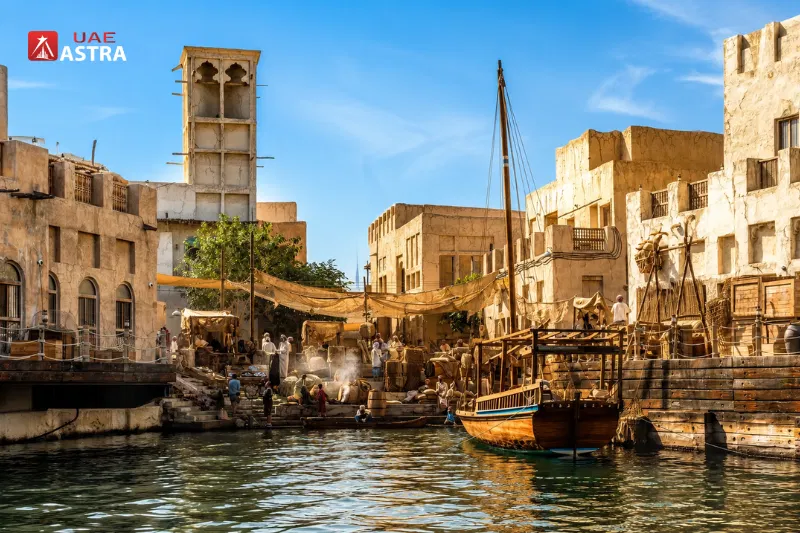
Dubai is widely known for its futuristic skyline, luxury shopping destinations, and modern architecture, but the city’s identity began long before skyscrapers transformed its landscape. Visitors can still see the traditions, architecture, and lifestyle that molded the early history of Dubai along the banks of Dubai Creek.
This heritage area is not about entertainment, as it is with the modern attractions. It enables visitors to appreciate the way of life of the people in the community, including their traditional way of fishing, pearl diving, trading, making crafts, and traditional architecture. The Al Shindagha Historic District around it also offers a further glimpse of Dubai’s history with museums and restored historical structures.
What Is Dubai Old Village?

Dubai Old Village is the historic heritage experience that focuses on Heritage Village Dubai in the Al Shindagha Historical District, one of the historic areas in Dubai, next to Dubai Creek. The term “Dubai Old Village” is not the official name of the attraction, but it is a popular search term and is used by visitors to find the traditional Emirati heritage sites that highlight Dubai’s pre-modern era.
Heritage Village Dubai was established in 1997 to showcase and uphold the traditional culture of the region, such as traditional architecture, pearl diving heritage, maritime activities, handicrafts and everyday Emirati life. The area represents old coastal, desert and mountain communities inspired by the reconstruction of buildings, cultural displays and heritage experiences.
Dubai Old Village offers a glimpse into the past of Dubai before oil and the city’s rapid expansion, and is close to some of Dubai’s landmarks, including Al Shindagha Museum, Sheikh Saeed Al Maktoum House and Dubai Creek.
The heritage area is now part of a larger cultural hub that offers a way for visitors to learn about traditional architecture, museums, local crafts, and the history of Dubai’s early economy, which was based on fishing, pearl diving, and trade.
Quick Facts About Dubai Old Village
| Information | Details |
|---|---|
| Main Heritage Location | Al Shindagha Historical District, Dubai |
| Also Known As | Heritage Village Dubai |
| Established | 1997 |
| Nearby Landmark | Dubai Creek |
| Managed By | Dubai Culture and Arts Authority |
| Main Theme | Traditional Emirati lifestyle and heritage |
| Nearby Attractions | Al Shindagha Museum, Sheikh Saeed Al Maktoum House, Diving Village |
| Experience Type | Cultural attraction and open-air heritage site |
History of Dubai Old Village and Heritage Village Dubai

The Story Behind Dubai’s Traditional Heritage
The sea played a prominent role in Dubai’s early history. The settlement was once a mainly agricultural economy, relying on trade, but before it became a global financial and tourism centre, it relied heavily on the following activities:
- Fishing
- Pearl diving
- Maritime trade
- Boat building
- Small-scale commerce
Dubai Creek was a natural harbour which was essential for the development of Dubai. The creek became a center of transportation and trade, and traders and fishermen settled along the creek.
The Al Shindagha area turned into one of Dubai’s most vital historic neighborhoods. It was situated in the vicinity of the mouth of Dubai Creek, where the members of the ruling family and the local community lived.
Development of Heritage Village Dubai

In 1997, Al Shindagha was founded to preserve traditional Emirati culture and give visitors a glimpse of historic life at Heritage Village Dubai. The site shows traditional architecture, craft, customs, and culture related to various environmental contexts of the region.
The village has become an integral part of Dubai’s heritage tourism initiative, bringing together the old and the new.
Dubai Old Village History Timeline
To comprehend Dubai’s metamorphosis, it is crucial to examine the key periods that have moulded its history.
| Period | Historical Development |
|---|---|
| Before oil discovery | Dubai’s economy depended on fishing, pearl diving, maritime trade, and local commerce |
| Early 1900s | Al Shindagha developed as one of Dubai’s important residential areas near Dubai Creek |
| 1912–1958 | Sheikh Saeed Al Maktoum ruled Dubai and lived in the historic Al Shindagha area |
| 1997 | Heritage Village Dubai was established to preserve Emirati traditions and cultural practices |
| Recent decades | Al Shindagha became a major heritage district with museums and restored historic buildings |
This is a map of the history of the city of Dubai and the development of the city into a modern international city without losing its cultural identity.
Location of Dubai Old Village
Dubai Old Village is situated in the Al Shindagha Historical District next to Dubai Creek.
The area is important as Al Shindagha is one of the first settlements in Dubai. Its location on the edge of the creek enabled the inhabitants to engage in fishing, pearl diving and trading.
A visit to Heritage Village can be paired up with other nearby historic sites:
- Al Shindagha Museum
- Sheikh Saeed Al Maktoum House
- Diving Village
- Dubai Creek waterfront
- Traditional areas of Bur Dubai
Why Al Shindagha Is Important in Dubai History
Home of Dubai’s Historic Community
Al Shindagha is one of the oldest districts in Dubai. The locality grew up beside the creek and was closely associated with the political, social, and economic history of Dubai.
One of its most famous landmarks is Sheikh Saeed Al Maktoum House, which was the residence of Sheikh Saeed bin Maktoum Al Maktoum, ruler of Dubai from 1912 to 1958. The building has been restored and opened as a heritage museum.
Preservation of Traditional Architecture
The district has examples of traditional Gulf architecture, such as:
- Wind towers (Barajeel)
- Courtyards
- Coral stone structures
- Palm-based building materials
- Traditional residential layouts
These architectural features have been created to meet the local climate conditions prior to the widespread use of modern cooling systems.
Main Things to See at Dubai Old Village
Traditional Emirati Houses
One of the best things about Dubai Old Village is the sighting of traditional houses built according to the traditional standards of the Gulf.
These houses show how the people lived with the desert climate by utilizing natural ventilation, providing shade, and utilizing materials that were available in the desert.
Visitors can observe:
- Courtyard-style homes
- Wind towers for cooling
- Traditional furniture
- Handmade decorations
- Historic household items
Emirati Handicrafts and Traditional Skills
Heritage Village Dubai features traditional crafts that have had an impact on local communities.
You can view examples of:
- Pottery making
- Weaving
- Metalwork
- Traditional jewellery craftsmanship
- Palm leaf products
These crafts belong to the old Emirati communities and demonstrate the skills that have been passed down through generations and the way of life of the past.

Pearl Diving and Maritime Heritage
There is a strong heritage theme in Dubai that relates to the sea.
Pearl diving was also a significant economic activity in the area before the discovery of oil. Divers went diving for pearls in the Arabian Gulf, and traders traded the pearls.
The nearby Diving Village tells about this sea history and the significance of fishing and pearl diving in the evolution of Dubai.
Dubai Old Village Experience: What Visitors Can Expect

Visiting the heritage area offers a more leisurely and cultural experience than Dubai’s modern attractions.
Visitors can expect:
- Historical storytelling
- Traditional architecture
- Cultural displays
- Heritage photography opportunities
- Knowledge about Emirati customs
- A link to Dubai’s early lifestyle
This attraction is particularly important for those visitors who wish to learn more about the evolution of Dubai from a small trading port to an international city.
Best Time to Visit Dubai Old Village
The best time to visit Dubai’s heritage sites is typically during the cooler seasons (October to April) as walking outdoors is more comfortable during this period.
Generally, morning and evening visits are preferred as the outdoors can be explored more easily.
Visitors should avoid extended outdoor walks during warmer months, and be sure to bring water on hand, particularly for short walks along nearby heritage streets and waterfront.
Al Shindagha Museum and Heritage Attractions Near Dubai Old Village

There are many attractions to visit in Dubai Old Village. The surrounding Al Shindagha Historical District has been turned into a full-fledged heritage attraction in which visitors can discover the museums, traditional houses, and tales behind the transformation of Dubai from a coastal settlement to a modern city.
The most significant attraction in the area is Al Shindagha Museum, showcasing Dubai’s cultural heritage with restored buildings, exhibits, and interactive displays. The museum showcases maritime heritage, trade, family life, customs, and the evolution of the city.
Al Shindagha Museum: A Major Cultural Attraction
Al Shindagha Museum is one of the most majestic heritage museums in Dubai, and it is an integral part of the Al Shindagha Historic District.
The museum, housed in historic homes and contemporary exhibition galleries, tells the various chapters of Dubai’s history. It does not just showcase objects but also brings the visitor into connection with the experiences of the people of the area.
Some of the important themes in the museum are:
- Dubai Creek and the birth of the city
- Traditional Emirati lifestyle
- Pearl diving heritage
- Trade and economic development
- Emirati customs and traditions
- Historical documents and family stories
Dubai Culture and Arts Authority, responsible for the preservation and promotion of cultural heritage in Dubai, looks after the museum.
Al Shindagha Museum Opening Hours and Entry Information
On average, Al Shindagha Museum is open from 10:00 AM until 8:00 PM, and the last entry is at 7:00 PM according to Dubai Culture information. Please check times before entry, as it is possible that times may be amended during the Ramadan period, public holidays, or special events.
| Visitor Information | Details |
|---|---|
| Location | Al Shindagha Historical District, Dubai |
| Opening Hours | 10:00 AM – 8:00 PM |
| Last Entry | 7:00 PM |
| Main Theme | Dubai’s history, culture, and heritage |
| Nearby Area | Dubai Creek waterfront |
Sheikh Saeed Al Maktoum House

Sheikh Saeed Al Maktoum House is another significant landmark in Dubai Old Village.
The historic house was once the home of Dubai’s first ruler, Sheikh Saeed bin Maktoum Al Maktoum, until he died in 1958. It has been restored and turned into a heritage site where visitors can see traditional architecture, historic photographs, and exhibits of Dubai’s ruling family and early development.
The house is a traditional Gulf house featuring:
- Natural cooling towers for wind cooling
- Courtyard design
- Coral stone construction
- The traditional rooms and layouts are suitable for this.
It gives a great glimpse into the life of the influential families before the advent of modern Dubai.
Diving Village and Dubai’s Pearl Diving Heritage

Pearl diving was one of the most significant aspects of Dubai’s early economy, as reflected in the nearby Diving Village.
The exploration of oil has been a significant contributor to the livelihoods of many communities around the Arabian Gulf, before its discovery. Pearl divers encountered tough times underwater, and traders linked Dubai to regional and international markets.
The heritage displays describe:
- Traditional diving equipment
- Fishermen’s lifestyle
- Boat-building traditions
- The importance of the sea in Dubai’s history
It is no surprise that Dubai Creek, a maritime route, was the basis for Dubai’s early development.
Dubai Old Village vs Modern Dubai Experience

The essence of the difference between Dubai Old Village and Dubai modern attractions is the type of experience they provide.
Dubai is famous for its:
- Skyscrapers
- Luxury shopping
- Entertainment attractions
- International events
The areas of heritage importance concentrate on:
- History
- Culture
- Architecture
- Traditional lifestyles
- Local stories
If you want to see Dubai beyond its skyscrapers, visit the historic districts for a more comprehensive view of Dubai.
How to Reach Dubai Old Village
The heritage area is situated in Al Shindagha, close to Dubai Creek, hence located in various areas of the city.
The area can be accessed by:
Dubai Metro
The closest metro stations for access are those in the Bur Dubai and Al Ghubaiba areas. There is a direct on-foot, taxi, or local transport link from there.
Taxi or Ride Services
Taxis can get you directly to the Al Shindagha Historical District. This is particularly helpful for families, the elderly, or those who have luggage.
Abra Experience
A Dubai Abra ride across Dubai Creek is a popular way to combine Dubai’s history with visiting the Abra heritage sites. In Dubai, one of the most ancient means of transport is the wooden boat.
Dubai Old Village Transportation Options
| Transport Method | Details |
|---|---|
| Metro | Al Ghubaiba Metro Station on the Green Line is one of the nearest metro options |
| Taxi | Taxis can directly reach Al Shindagha Historical District |
| Bus | RTA bus services connect the surrounding Old Dubai areas |
| Abra | Visitors can combine the trip with a traditional Dubai Creek abra ride |
The area allows Dubai Old Village to be easily integrated with other attractions of Old Dubai, such as waterfronts, traditional markets, and museums.
Best Things to Do Around Dubai Old Village
Explore the surrounding heritage area for activities that will leave you with a cultural day in Dubai.
Recommended experiences include:
- Passing through the rejuvenated historic streets
- Visiting museums and historic houses.
- Dubai Creek experiences are explored. Views of Dubai Creek are explored.
- Photographing traditional architecture
- Discovering Emirati culture and traditions
- A combination of the visit and the nearby souks
The region is particularly good for history buffs, photographers, families, and those seeking cultural interests.
Places to Visit Near Dubai Old Village
Dubai Old Village is located such that it provides easy access to visit several historic sights within the same vicinity.
Sheikh Saeed Al Maktoum House
The house is an historic dwelling located in Al Shindagha, a historic neighborhood where Sheikh Saeed bin Maktoum Al Maktoum, who ruled Dubai from 1912 to 1958, used to live. The reconditioned building offers a glimpse into the architecture of the traditional Gulf state and the history of Dubai’s rulers.
Dubai Creek
Dubai Creek is the basis of the development of Dubai’s early history. The fishing, pearl diving, and trading in the creek helped Dubai become an important trading hub.
Al Fahidi Historical Neighbourhood
The other heritage area is Al Fahidi, which accommodates traditional wind towers, narrow lanes, museums, and restored buildings of historic Dubai architecture.
Dubai Gold Souk and Spice Souk
Dubai Gold Souk and Spice Souk are traditional markets that continue the long history of Dubai’s trade and offer a real cultural shopping experience.
Tips for Visiting Dubai Old Village
With a bit of planning, it’ll be more tolerable.
- Come brave the cold in the winter months for better walking outside.
- Please wear comfortable shoes as there is a walk in the heritage district.
- Bring water in hot weather.
- Visit at times of the day that are attractive to the animals.
- Take your time to visit a number of local museums rather than going through one.
Why Dubai Old Village Is Worth Visiting
While many come to Dubai to enjoy modern attractions, heritage areas offer a glimpse into the roots of the city’s success.
Dubai Old Village is an illustration of how a small seaside community grew through trade, craftsmanship, and maritime activities. It brings people in touch with the traditions that still shape the identity of the Emiratis today.
It’s not just about old buildings. It’s all about knowing people, skills, and history that have made Dubai what it is.
Dubai Old Village vs Al Fahidi Historical Neighbourhood
| Feature | Dubai Old Village (Heritage Village) | Al Fahidi Historical Neighbourhood |
|---|---|---|
| Main Focus | Emirati traditions and maritime heritage | Historic architecture and cultural streets |
| Location | Al Shindagha | Bur Dubai |
| Famous For | Pearl diving, traditional lifestyle, heritage displays | Wind towers, museums, walking experiences |
| Best Experience | Learning Dubai’s coastal history | Exploring old residential architecture |
These are both a part of Dubai’s past and are enjoyed by visitors to Old Dubai.
You may Also Like to visit: Khalifa Park Abu Dhabi: Timings, Tickets, Attractions & Visitor Guide
Green Community West Dubai: A Neighborhood Built Around Space and Greenery
Frequently Asked Questions
What is Dubai Old Village?
Dubai Old Village is a commonly used search term for Dubai’s traditional heritage areas, especially Heritage Village Dubai in Al Shindagha Historical District.
Is Dubai Old Village the official name?
Dubai Old Village is not one of the attractions’ names. The term is typically used when searching for an experience in Heritage Village Dubai and Old Dubai.
Where is Dubai Old Village located?
Al Shindagha Historical District is situated next to Dubai Creek, with Dubai Old Village.
When was Heritage Village Dubai established?
In 1997, Heritage Village Dubai was founded to restore traditional arts, crafts, and lifestyles of the Emirates.
What can visitors see at Dubai Old Village?
It offers a chance to visit traditional houses, cultural displays, handicrafts, pearl diving heritage, and local museums.
Is Dubai Old Village suitable for families?
Yes. The heritage area is an ideal destination for families due to its educational cultural experiences and historical attractions.
How long does it take to explore Dubai Old Village?
Typical visitors to the Heritage area can visit for 1-3 hours.
What is the nearest metro station to Dubai Old Village?
The Al Ghubaiba Metro Station is one of the nearest metro stations to the Al Shindagha area.
What are the best attractions near Dubai Old Village?
The local sites are Al Shindagha Museum, Sheikh Saeed Al Maktoum House, Dubai Creek, and traditional souks.
Is Dubai Old Village worth visiting?
Yes. It is a chance to learn more about Dubai’s history, Emirati culture, and the traditional ways of life before the modern development of Dubai.