







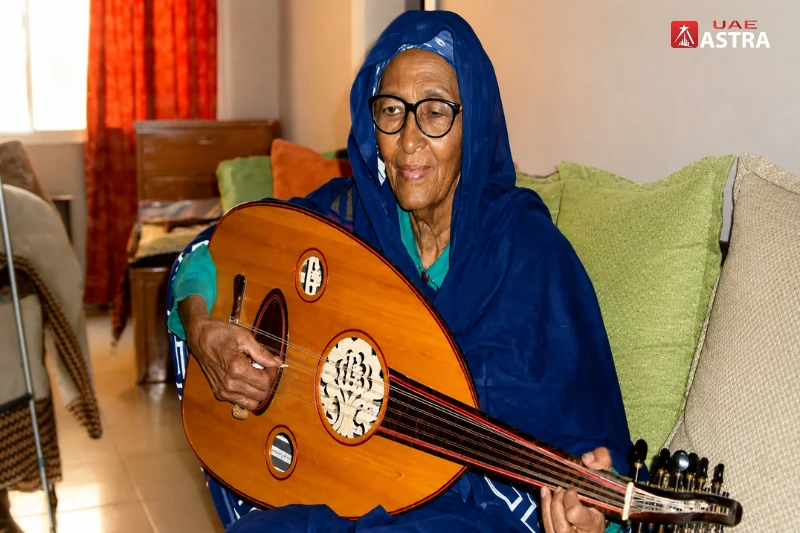
The legacy of Asma Hamza is more than just a music story. It’s the tale of passion, resilience and cultural identity through Sudanese music’s emotional beats. In a society where women composers were not given their due in the concert hall, she developed her reputation to become one of the most esteemed among women composers in the Sudanese and Arab musical tradition. She used her oud to distill and embellish personal expression into timeless music, to lift the spirit of Sudanese heritage across generations.
Her influence has today spread far beyond Sudan and continues to reach new audiences. With an interest in culture, women pioneers and the preservation of cultural heritage on the rise in the Middle East, Asma Hamza’s artistic journey has become more significant in the multicultural cultural scene of the UAE. Her recognition via Google Doodle brought her work to the international market and made her known as a reminder of the power of music to maintain memory, provide inspiration for social change, and bridge cultures via emotion and tradition.
Early Life and Cultural Background
Growing Up in the Cultural Heart of Khartoum
Not surprisingly, the artistic origins of Asma Hamza occurred in the cultural melting pot of Khartoum, where African and Arab customs, traditions, social behavior, language and art fused. Music holds immense significance for the Sudanese people, who have long traditions of music, with songs and melodies playing a significant role in their cultural expression, identity, spirituality and collective memory.
Influence of Traditional Sudanese Music
As a child, this environment sensitized her to a range of musical influences that would inform her work. Rudimentary dances in Sudan were often accompanied by rhythmic percussion, storytelling and emotional singing. These artistic elements became a central part of her understanding of the structure of composition and musical matters.
Exposure to Classical Arabic Musical Traditions
Meanwhile, the spread of radio broadcasting in the Arabic language brought Sudanese listeners in touch with the classical music of Egypt and other Middle Eastern countries. Listeners learned the sound of the oud, superlative musical systems and arrangements of the orchestra, and the fine musical styles of the wider Arabic world through these broadcasts.
Learning Music Through Listening and Experimentation
Asma Hamza’s artistic knowledge is largely the product of the care she took in listening and experimenting, which is not necessarily the way most formally trained composers have developed their understanding of music. She practiced endlessly to compare melodies, to recognize rhythm patterns and to perform music arrangements. She was able to expand her emotional relationship to music and to begin to develop an innate understanding of composition through this self-guided learning process.
Overcoming Social and Cultural Barriers
It was even more important because opportunities for women in music were limited at the time. In more conservative societies, engaging in art activities – particularly instrumental performance and composition – was not encouraged for women. Yet, she persevered in her musical journey, and over time, emerged as a figure in the rapidly growing Sudanese music landscape.
Journey Into Music
Discovering a Passion for Composition
Asma Hamza’s musical upbringing was full of curiosity, discipline and sensitivity. Music wasn’t just for entertainment for her. To her, melody was a form of identity, a way to remember, and a means of communication.
She was learning how musicians’ structures could invoke various emotions by listening to traditional music and Arabic orchestral music. She was especially fascinated by the interplay of rhythm and melody in compositions to evoke emotion.
She grew up to play the oud, one of the most esteemed instruments in traditional Arabic music, because of this attraction. The expressive qualities of the instrument gave her a medium for expressing emotions through sound and composition in her storytelling.
She became fascinated with this link between her and the oud, and her connection with it became the basis of her art. With practice and experimentation, she discovered how to express longing, nostalgia, joy, and reflection in a strictly non-verbal manner with different melodic movements.
Learning Without Formal Conservatory Training
One of the most outstanding things about her career is the fact that she has not received any formal conservatory training. In her youth, there were hardly any institutional music training opportunities available for women. This limitation did not prevent her from expanding her artistic insight; she simply drew on her experience through observation, listening and experimentation.
Although her musical education was influenced by several factors:
- Traditional rhythms of Sudan and the adjacent regions
- Traditional Arabic classical orchestra music
- Using instrumental music to evoke emotion in the story
- Radio concerts of Egyptian and Arab composers.
All these influences contributed to her developing a unique artistic voice, rooted in the Sudanese identities, but grounded in the broader Arab musical landscape.
As she grew older, her music was noted by other musicians and singers in the neighborhood. Her perception of emotional, melodic and arrangement skills set her apart from many new artists in the Sudanese music field.
Public Recognition and Artistic Emergence
From private experimentation to public recognition, the important steps she took were crucial moments in her journey. At first, many of her works were shared among friends, family and musicians in the area. After some time, her music was transported to Sudan via singers who were influenced by her music.
When listeners realized the composer of some of their favorite music was female, there was definitely a rise in interest in his or her music. This recognition challenged the current notion of roles of women in professional music composition/orchestration.
As she gained in reputation her success on stage became more than just a success. It was an expression of social improvement and growing awareness in the Sudanese society about the creativity role of women.It was a perception of social improvement and growing awareness in the Sudanese society about the role of creativity for women.
The Importance of the Oud in Her Artistic Identity
The oud is a legendary instrument in the history of Arabic music. It is said to be the basis of classical Arab music and has had a profound influence on musical styles in the Middle East and North Africa for many centuries.
In the eyes of Asma Hamza the oud was not just an instrument. It came to mean so much to her that it became a language of her own to express the intricacies of her emotions and cultural memory.
The expressive scope of its tone enabled her to compose music of emotional flow and melodic density. With the oud, she explored how emotion is connected to rhythm, silence and melody, in a manner that hit her listeners right in the middle.
Emotional Storytelling Through Instrumental Music
Lyrical poetry is an essential element in many of the traditional compositions, which convey their meaning through it. But her music sometimes highlighted emotion through instrumentation.
Within her music, the passing of melodic phrases allowed her to evoke sadness, hope, strength, and contemplation without ever needing to use long explanations of words. It was instrumental communication of emotion that emerged as one of the hallmarks of her musical personality.
People listened to her arrangements and enjoyed the authenticity and sincerity. She didn’t use too much technology and instead paid attention to emotionality and cultural relevance.
Preserving Traditional Musical Techniques
She brought with her an understanding of traditional Arabic musical systems that helped to maintain vital aspects of Middle Eastern musical culture. She blended Arabic maqam elements with the original rhythm of Sudanese music.
Her balance of preserving the culture while at the same time innovating made her compositions popular not only with the people of her region but also culturally authentic.
Her own artistic significance continues to shape one of the contemporary issues of traditional music preservation throughout the Arab world.
Contribution to Sudanese Musical Heritage
The story of Asma Hamza is linked closely to the conservation and development of musical identity in Sudan. Music in Sudan has a peculiar cultural role as it reflects African rhythmic and Arabic melodic culture.
Her music was influential in fostering an understanding of this artistic richness.
Blending Sudanese and Arabic Influences
Her most notable work was the ability to combine elements of various cultures into cohesive pieces that were emotionally natural and authentic.
Her style of music manifested several significant elements:
- Traditional rhythm patterns from Sudan which are inspired by percussion.
- The traditional structure of melodic music in classical Arabic.
- Emotional orchestral arrangements
- Music based on the culture of African Arabs.
The artwork played a crucial role in popularizing Sudanese musical tradition to the broader Arab community and fostering the appreciation of Sudan’s cultural diversity.
Protecting Cultural Identity Through Music
Music is an important way of keeping the memory of history and culture alive. Her compositions preserved Sudanese emotional customs associated with the Sudanese society during a time of social and artistic changes.
Her work preserved:
- Traditional melodic structures
- Sudanese Art of Storytelling through emotions.
- Regional rhythmic identity
- Instrumental approaches to cultural memory
Her work is still relevant today in the debate surrounding art preservation and cultural identity in the region.
Challenges and Cultural Resistance
Asma Hamza’s path as an artist was influenced not just by her own dreams of artistry but also by cultural resistance. In the beginning of her career, most people thought of music as an artist’s domain for men, and composition and orchestral music were a male space.
Women aspiring to public careers were often subject to criticism, pressures, and restricted professional opportunities. These limitations imposed more barriers for women to find recognition in the music industry.
Nevertheless, she worked relentlessly and slowly garnered recognition for her efforts and creative abilities.
Social Expectations and Gender Barriers
Many socially conservative societies expected women to stay outside public fields of art. Women’s involvement in composition and instrumental performance was sometimes doubted, especially as it was the domain of men.
She refused to stop there and kept going on with her artistic pursuits. The success of her career proved that innovation and creativity based on and in music was not solely a male domain.
This impact eventually helped to shape the wider debates about the role of women and women’s representation in Arab and African cultures.
Emotional Depth Born From Struggle
Emotional experiences are often creatively expressed without being given direct expression when working in a restricted environment. Her music was filled with layers of resilience, reflection and muted resistance that many listeners were able to identify.
This emotional authenticity was one of the reasons her music continued to resonate with the audience long after its original release.
Her story eventually came to represent the story of women seeking more space for participation in creative industries and leadership in the cultural field.
Influence on Women in Arab and African Music
The success of Asma Hamza brought new opportunities to women who were interested in composition, orchestration and instrumental playing in every Arab country and in Africa.
Her successes defied conventional notions of what women musicians were doing in the profession and proved that women could be central to musical invention, cultural heritage, and the material of musical memory.
Representation in Composition and Instrumental Music
Representation is a big deal in the cultural industries. As women get recognised in limited spheres, there is a slow but definite shift in social perceptions.
Her career was an example to younger female musicians that women could be respected composers, arrangers, and instrumentalists and not confined to merely ancillary roles in musical careers.
This cultural change led to more discussions on the topic of gender equality and women’s leadership in the Arab artistic realm.
Lasting Cultural Impact
Leading artists can have an impact over many generations. She made contributions that helped inspire:
- Greater visibility for female composers
- Recognition of women’s contributions to Arab music history
- Appreciation for African-Arab female creativity
- Expanded conversations about women in cultural leadership
These themes persist in the regional cultural discourse, research and heritage-driven artistic projects today.
Musical Style and Artistic Characteristics
Her music was characterised by emotional sophistication and cultural authenticity. Her music was not technically as demanding but rather focused on conveying characters and emotion.
This artistic interpretation enabled her to maintain her music’s emotional approachability, but at the same time retain its profound cultural significance.
Rhythm and Emotional Structure
Rhythm and emotional flow are hallmarks of Sudanese music. She employed these traditions in her compositions and added wider influences of Arabic orchestral music.
She did not make sudden odd cadences as contrasts, but often employed the smooth melodic changes that helped create an emotional flow throughout the work.
This resulted in listening experiences that were quite reflective, calming and emotionally immersive.
Influence of Arabic Maqam Traditions
Maqam is the root basis of traditional Arab music. These musical forms and structuring patterns create mood and tonal flow in a piece of music.
Her knowledge of the traditions of maqam enabled her to produce music that would resonate with listeners from a variety of Arabic cultural backgrounds and yet maintain a distinctly Sudanese identity.
A fusion of Sudanese rhythmic identity into the general maqam tradition came to be a central element of her musical development.
Instrumentation as Emotional Narrative
She often used instrumentation as the narrative of emotion in her compositions, which was one of her strongest features.
With the oud and accompanying instrumentation, she brought about emotional narration that was able to convey:
- Nostalgia
- Reflection
- Longing
- Hope
- Cultural memory
This emotional depth had a great impact on the impact of her work.
The Relationship Between Sudanese and Arab Cultural Identity
The artworks of Asma Hamza were a reflection of Sudan’s historical ties with the Arab world. Examining Sudanese culture allows us to see how it is inherently African and Arab, having been influenced by both with their own traditions, language, music, and poetry.
Her works were models of such cultural crossing.
Music as Cultural Exchange
One medium that is still the best for cultural exchange is music; it can cross many borders without losing its authenticity.
In her performances, Sudanese music became more popular and accessible to the Arab audience. Her music was an example of how regional styles could change in the process of interchange while not losing their cultural identity.
This is still very relevant in the contemporary contexts of the Gulf Societies, where multiculturalism still plays a role in the formation of cultural identity.
Regional Appreciation for Sudanese Music
Sudanese music has been gaining popularity, especially in the emotional qualities and originality of its rhythms, throughout the Middle East.
In this appreciation, artists such as Asma Hamza have excelled by interpreting the traditions of Sudan in a refined way of composing and orchestrating.
Her music brought about a wider appreciation of the diversity and complexity of Arab musical heritage.
UAE Cultural Relevance and Artistic Legacy
The UAE has become a key cultural hub in the Middle East, championing the preservation of heritage, artistic discourse, and cultural exchange among diverse communities. There are ongoing discussions about Arabness and African roots, women in the arts, and local musical traditions at institutions in Dubai and Sharjah, not just in Dubai. Not only in Dubai, but in Sharjah as well, ongoing discussions take place about Arabness, African roots, women in the arts, and regional musical traditions.
In this context, the legacy of Asma Hamza has a high level of culture.
Heritage Preservation in the UAE
As highlighted in many cultural programs in the UAE today:
- The cultural heritage of the Arabs is preserved.
- Valuing and honoring the creativity of multiculturalism
- Women’s participation in cultural industries is still very low.
- Fostering the practice of regional music traditions
- Cross-cultural artistic dialogue
Her story so closely captures many of these themes that it is not surprising that her work is related to UAE-based artistic and cultural discourse.
Connection With Multicultural Artistic Conversations
The UAE’s multicultural composition has sparked an interest in the arts of Africa and the Arab world. There is a multicultural environment, and the Sudanese music contributes to this environment and is influenced by both the African style and the Arabic style.
The compositions written by Asma Hamza are emotionally sincere and culturally authentic, which can be felt within these artistic discussions.
Her legacy also opens up the discussion about artistic identity and cultural exchange between Africa and the Arab world.
Women in Creative Leadership
Increasingly, the UAE has encouraged women to get involved in arts, entrepreneurship and leadership in cultural activities. In this context, the work of Asma Hamza remains a testament to the determination and contribution of women in art.
Her success proved that despite being constrained by culture, women could make a difference in cultural history by creativity, innovation and resilience.
Global Recognition Through Google Doodle
Google celebrated Asma Hamza’s life with a dedicated Google Doodle and her story has now gone far beyond what was known in international circles. This recognition was an introduction to her art legacy for international viewers who were not yet familiar with Sudanese music history.
It is crucial to promote younger generations to learn about their history and culture by celebrating these great men and women digitally, for they will spread these stories further and may contribute to a more globally balanced understanding of their greatness and importance.
Renewed Interest in Sudanese Music History
The Google Doodle tribute helped boost interest around the world in:
- Sudanese musical heritage
- Female Arab composers
- Traditional oud performance
- African-Arab artistic history
- Women: Pioneers in Music
This newfound exposure prompted a deeper exploration into her contributions by cultural researchers, educators, and music buffs alike.
Digital Preservation of Cultural Heritage
Thanks to modern technology, preservation and dissemination of artistic history have changed. The media of web archives, online documentaries, learning sites and online publications are now important means of safeguarding cultural memory.
Her work being recognized by the digital medium of communication strikingly illustrates that historical artists can continue to shape modern cultural dialogue beyond their lifetime.
Why Her Legacy Still Matters Today
She still resonates today, not just because of her cultural significance but also her representation and authenticity in art.
Her journey resonates with audiences because of the themes she engages with that are still relevant in contemporary society.
Cultural Identity in a Globalized World
With the commercialization of entertainment around the world, traditional art forms in regions are increasingly crucial to preserve.
Her music serves as a reminder that music and sound can hold historical memory, emotional identity and cultural belonging over generations.
Inspiration for Future Artists
Traditional musicians’ students are looking for performers who combine the traditional with the innovative. Her work shows how regional art styles can change without losing their emotional and cultural connections.
This balance continues to be of critical importance to those of the future who wish to preserve the musical heritage of the Arabs and Africans.
The Importance of Remembering Cultural Pioneers
Keeping memories of the great composers and musicians alive helps to build an appreciation of regional history and artistic diversity. Asma Hamza is becoming more visible as we realize the importance of keeping alive the histories of women who created and struggled for cultural identity.
Her legacy remains to remind people that music is not just entertainment. It’s also memory, identity, resistance and emotional connection over the generations.
Conclusion
Asma Hamza’s legacy stands as a testament to artistry, cultural heritage, and an emotional approach to music, deeply inspired by Sudanese and Arab musical traditions. With her skill in the oud and her unique style of composition, she helped to keep valuable elements of regional culture alive and continue to influence the creative generation of future generations.
Her impact extends beyond Sudan into broader global Middle Eastern conversations, where issues of heritage conservation and cultural exchange across different communities are still key matters in the UAE agenda.
Her music resonates in the discussions about music, identity, women’s empowerment and place today, as audiences continue to meet historical trailblazers on digital platforms and via cultural research.
Her life story is still a compelling testament to the power of music to hold memories, overcome social barriers, and bridge generations and borders.
Read Also: Saadiyat Marina District: A Modern Waterfront Community in Abu Dhabi
Frequently Asked Questions
Who was Asma Hamza?
A Sudanese composer and oud musician who was known for her work in Sudanese and Arabic music. She was among the significant women pioneers in Arabic music.
Why is Asma Hamza important?
She contributed to the maintenance of the musical identity of the Sudanese people, with the fusion of African and Arabic music elements. Her work also helped to broaden the areas in which women were recognized in the composition and instrumental areas.
What instrument did she play?
Her close association with the oud, a traditional stringed instrument of Middle Eastern origin and central to classical Arabic music, makes her a close companion to Arabic music.
Why did Google honor Asma Hamza?
Artist and cultural icon, she was celebrated by Google with a special Google Doodle, bringing her talent and legacy to the world.
How did she influence women in music?
This success defied the male dominance in the professional composition field and encouraged the youth of women musicians in the Arab world and Africa.