







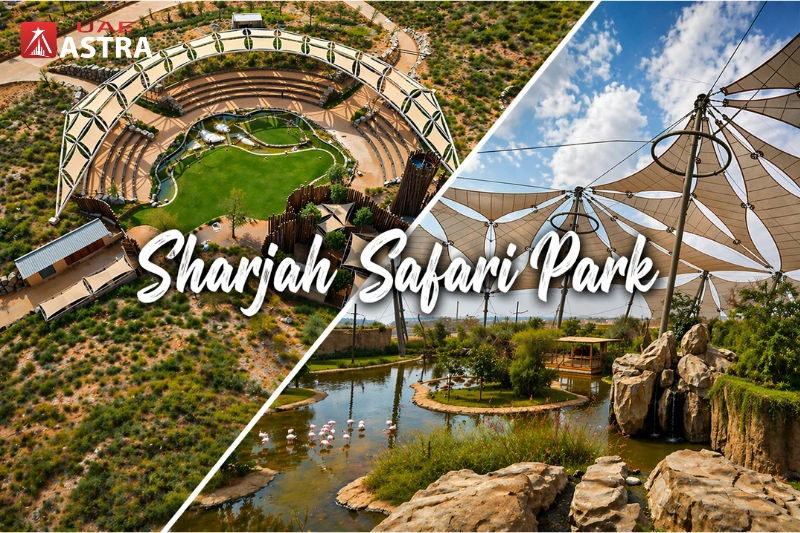
Sharjah Safari Park is a key change in the way in which wildlife parks are developed and visited in the Middle East. The park is located in the emirate of Sharjah, and it has been built as a large safari park instead of a traditional zoo. This differentiation is essential as it determines the expectations of the visitors and the general framework of the experience as well.
The park itself is constructed on a large deserted area, which provides an opportunity to create open habitats which imitate African ecosystems. This method encourages the natural behaviour of animals and provides visitors with an immersive safari experience. Unlike the conventional enclosures, the design focuses on space, environmental authenticity, and ecological balance.
Tourism and search intent-wise, individuals who search safari park Sharjah or Sharjah safari park tickets are not only seeking pricing information, but also trying to know whether the experience is worth the visit.
Location Context and Accessibility
Sharjah Safari Park is situated on the outskirts of Sharjah, along the Al Dhaid Road. This place is important in the sense that it offers the area where big safari areas can be located, yet it is also reachable by big cities.
Tourists who come in Dubai or any other emirate usually drive themselves because of the lack of public modes of transport. Accessibility by road means that the park can be accessed within a decent travelling time.
Concept, Scale and Development Vision
The long-term vision of This Park is based on a blend of tourism, conservation, and education. The scheme is part of a larger effort by the United Arab Emirates to get people to visit attractions other than urban landmarks and shopping centres.

The size of the park is zonal based on its ecosystem. The reason why each zone is a particular area of Africa is that animals are not classified based on the look, but based on their compatibility with the habitat. This is one of the major differences from the conventional zoological layouts.
The development vision may be interpreted as three layers that are interrelated. To begin with, the park acts as a tourism site, which draws locals and foreigners. Second, it can be used as a conservation platform where species protection and breeding programs can be established. Third, it serves as a learning area in which visitors are made aware of environmental sustainability and biodiversity.
This multifaceted strategy makes the park more relevant to various audiences, such as families, tourists, and students.
Sharjah Safari Park Ticket Price and Booking Structure
Understanding the Sharjah Safari Park ticket price is essential because pricing is directly linked to the type of experience offered. The park does not operate on a single-entry model; instead, it provides tiered access based on the level of immersion.
Ticket Pricing Model
The pricing system is typically arranged into groups, which present the level of access and the type of visitor:
| Category | Experience Level | Key Access Features |
| Standard Entry | Basic safari experience | Access to main zones + shared safari ride |
| Child Entry | Discounted access | Limited zones + shared transport |
| Family Package | Group-oriented access | Combined tickets + guided experience |
| Premium / VIP Safari | High-end experience | Private vehicle + extended access |
The model is consistent with the international safari parks in which the price is related to exclusivity and experience.
Booking Flow and User Behaviour
Tourists seeking the sharjah safari park tickets would often want a hassle-free booking system. Convenience and availability control have made online booking the predominant approach. It enables the user to choose time slots, select the type of tickets and eliminate the waiting on site.
On-site ticket counters are still found, but it is more appropriate when visiting during the off period. The demand may surpass the capacity during weekends or holidays, and in this case, it is best to book in advance.
Value Perception and Pricing Logic
Visitors usually judge the ticket price based on what the experience offers rather than the cost alone. Features like guided safari tours, large open habitats, and the variety of wildlife make the overall experience feel more worthwhile.
Timings, Climate Considerations and Best Time to Visit
The Sharjah Safari Park needs to be planned according to the working hours as well as the weather conditions. As the park is in a desert area in Sharjah, daylight and temperature are major factors that affect the safari experience.
The park is typically open in the daytime so that it can be seen, safe, and the animals are at the optimum activity. Nevertheless, the experience of the visitors may differ according to the time of arrival and season.
Sharjah Safari Park Timings Overview
| Day Type | Opening Time | Closing Time | Notes |
| Weekdays | Morning | Afternoon | Moderate crowd, smoother safari flow |
| Weekends | Morning | Afternoon | Higher demand, booking recommended |
| Peak Season | Early hours | Late afternoon | Best experience due to cooler weather |
| Summer Season | Morning | Early close | Heat affects both visitors and animal activity |
How Timing Affects Your Experience
The time you visit will determine what you will see and the comfort of the visit. Most of the time, the animals are more active in the morning since the temperatures are lower. This enhances the likelihood of witnessing natural behaviours like movement, feeding and interaction.
Conversely, visits in the afternoon, particularly in hot seasons, might lead to poor animal sightings, with most animals resting or hiding in the hottest time of the day.
Best Time to Visit Sharjah Safari Park
The best time to go is in the cooler months in the United Arab Emirates, which are usually in the months of November to March. The weather is also more pleasant outdoors during this period, and the safari experience is pleasant.
In terms of timing (day-to-day), it is better to come early, which offers several benefits. It enables visitors to explore the safari prior to peak times and also enjoy improved photos of the safari and visibility in the open areas.
Safari Experience: Structure, Flow and Immersion
Sharjah Safari Park can be characterized by the safari experience. It is organised like a guided tour and not a tour of the free-roaming.
Safari Zones and Ecological Representation
The park is cut into several areas, which are characterised by different ecological systems. These areas are not entirely visual; they are planned to aid species-specific environmental requirements.
The zoning development forms a narrative experience whereby visitors move between one ecosystem and another. This design boosts immersion and learning.

Wildlife Diversity and Behaviour
The park is home to diverse species that are related to the African wildlife ecosystem. These are large mammals, herbivores and predators. Open habitats enable animals to display their natural behaviours by grazing, moving and socialising.
The spatial design does not cause stress to the animals as would be the case in the confined environment, and also, the quality of observation for the visitors has been enhanced.

Guided Safari Mechanics
Tourists normally tour the park using tracks. Such a flow of movement is safe and can be used to narrate the stories in an organised manner in the course of the tour. Guides give background information on animal species, habitat conditions, and conservation.
Accessibility and realism are set to be balanced in the experience, which will make sure that visitors feel close to nature without affecting safety measures.
Conservation Strategy and Environmental Integration
Sharjah Safari Park incorporates conservation in its operating model, and thus, it is a blend of a tourist attraction and a wildlife reserve.
Conservation Objectives
Breeding programs and habitat simulation help the park to preserve wildlife. These are conservation efforts to conserve species that are under environmental threat in the wild.
Environmental Design
The construction of the infrastructure is designed in a way that minimises ecological disturbance. Sustainability principles are aligned with water use, planning the vegetation and land management. This makes it viable over the long term without interference with environmental integrity.
Visitor Experience and On-Ground Journey
The visitor experience in Sharjah Safari Park is designed in such a way as to ensure a continuous flow and interaction throughout the park. The experience is not concentrated in a small area, as it is in urban attractions, thus affecting the manner in which visitors engage with the space.
Rest areas and dining zones are located strategically in order to support the long visits. The design enables visitors to navigate in the park without exhaustion and at the same time be immersed in the environment.
The park is also very family-friendly as it offers a combination of education and recreation. Children are able to see animals in almost natural settings, and this improves learning results over the dead exhibits.

Decision Perspective: Is Sharjah Safari Park Worth Visiting?
In decision-making, the users tend to consider whether the experience is worth the time and money. Sharjah Safari Park has a combination of scale, realism, and education, which makes it stand out from smaller attractions.
The open habitat, the guided safari and the conservation aspects help to make it a more meaningful experience. To tourists seeking wildlife or recreation, the park offers a unique alternative to indoor entertainment.
Practical Visit Tips
Even a trip to the Sharjah Safari Park may be greatly enhanced by planning your visit to it. Given that the park is massive and the area is a desert, small choices can influence the level of your enjoyment of the safari.
To make your visit smoother and more efficient:
- Come in the morning so as to see more animals and to prevent the rush.
- Book tickets beforehand, particularly on weekends or holidays.
- Wear light breathable clothes befitting a desert environment.
- Wear sun protection (hats, sunscreen, and sunglasses).
- Bring plenty of water to keep hydrated during the safari.
- To be safe and to have a better interaction with the wildlife, follow the rules of the parks in safari tours.
These are the measures that will assist in making sure that visitors do not have to endure unreasonable discomfort and delays during the safari.
Conclusion
The Sharjah Safari Park is a massive project on how conservation and education merge with wildlife tourism. It has an organised safari experience, zoning of the environment and the orientation towards visitors, and these are the reasons why it is a major attraction in the United Arab Emirates.
To individuals who want to enjoy a full safari experience in the region, the park provides a fairly balanced accessibility, realism, and environmental sensitivity. Adequate planning on the tickets, timing, and travel can greatly augment the visit.
Read Also: Mazyad Mall Abu Dhabi: A Practical Guide to Shops, Food & Services
Frequently Asked Questions
What is the ticket price of Sharjah Safari Park?
The cost of tickets varies depending on the kind of experience chosen, such as a basic entry ticket or a premium safari package.
How can I book Sharjah Safari Park tickets?
The tickets may be reserved on the Internet using the official websites, or they may be bought at the entrance to the park.
What are the timings of Sharjah Safari Park?
The park works in the daytime, and it varies according to season and updates related to operation.
What animals can be seen in Sharjah Safari Park?
The species include the elephants, lions, giraffes, zebras and rhinos that visitors can observe in the open habitats.
When is the best time to visit Sharjah Safari Park?
When the weather is cooler, in the morning, it is the most enjoyable.