




In the modern UAE home, the dining table will typically be located in the middle of two contrasting rooms. A kitchen is where food is prepared and a living area is where one could relax and entertain. The table needs to link these spaces in such a way that neither space feels crowded.
It is this balance that is most significant in open-plan apartments in Dubai and modern villas, where furnishings, finishes and lighting all contribute to the interior of the home. When it comes to selecting the right dining table, one should not just consider the number of seats, but also consider other things. It is decided by its proportion, shape, material and base design, all of which impact the room’s appearance and performance.
These are the steps to take in making those decisions.
1. Start With the Space You Have
The dining table may be placed between the kitchen island and sofa in a Downtown Dubai apartment – and there is no space to keep the dining area separate. If the table is too wide, it may not afford adequate space for moving chairs or dishes from the kitchen. If both tables seat 6, you might want to go with a narrower rectangular table.
The question of a villa dining area is another one. In the same room where the table is located under a pendant light fixture and has a high ceiling, having a small table will make it feel out of place. It’s not a universal rule to purchase a bigger table. Ensure space is clear between the table, light fixture and surrounding furniture. All three should feel ‘equal’ or ‘fair’.
Take measurements of the dining space and then set the table approximately 90 cm from any walls or furniture, as far apart as possible. Also look into the size of the chair. A table can be very cozy for one person and may have insufficient space when chairs are pulled away.
2. Match the Dining Table to Your Interior Style
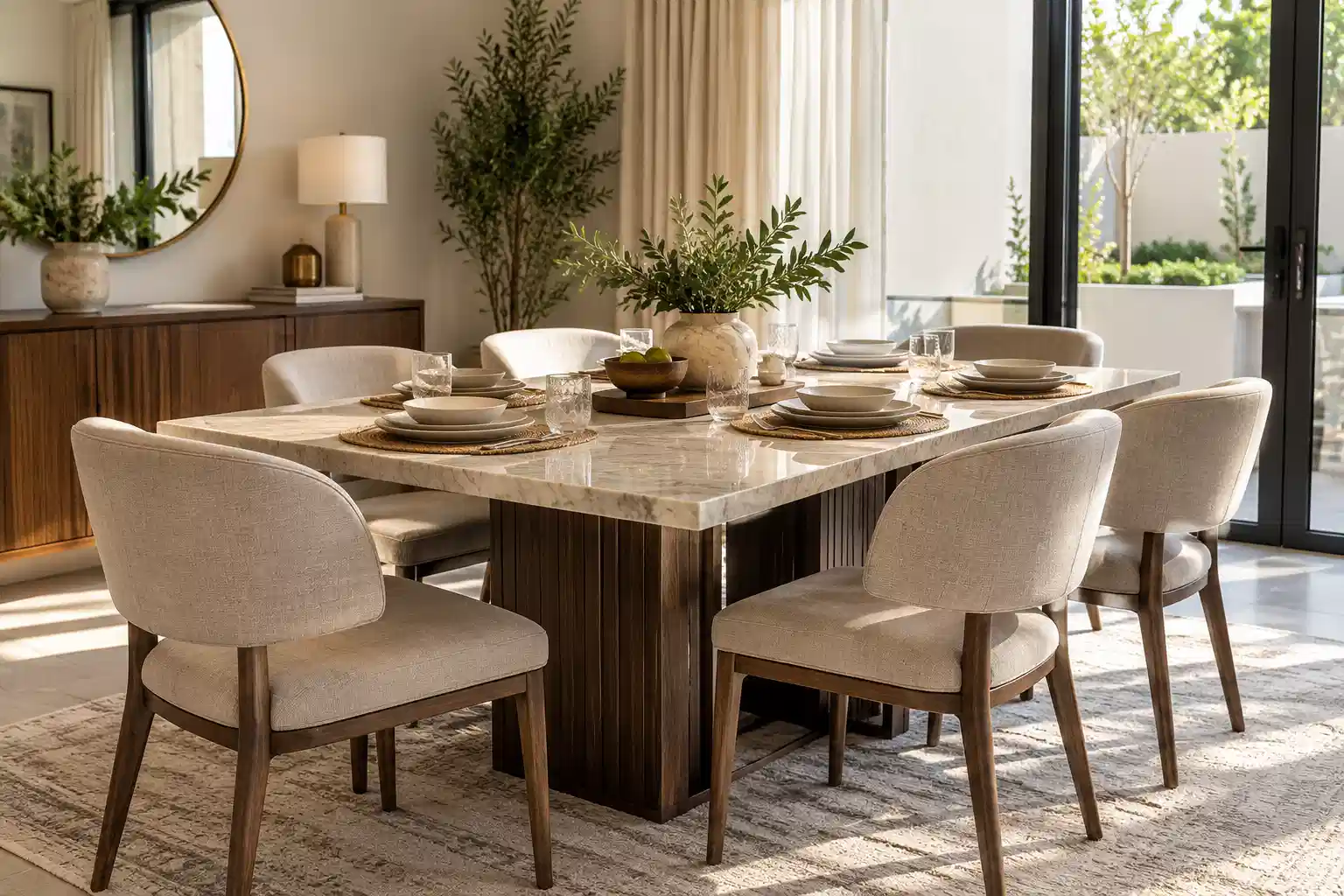
Simple walls and simple upholstery can be complemented by the use of a marble table. Place the same table in a room where the flooring is made of heavy patterned stone and the two distinct surfaces can be a battle for attention. The table should complement the space it is in.
This is a starting point for this comparison.
| Minimalist apartment | Slim rectangular table with a simple base | Keeps the arrangement visually light and makes efficient use of a defined dining area. |
| Contemporary luxury villa | Sculptural marble table with a substantial base | Creates a focal point in a spacious room without relying on excessive decoration. |
| Warm, natural interior | Travertine dining table | Complements earthy colours, textured fabrics and natural finishes. |
| Neutral, open-plan interior | Oval table with a restrained finish | Softens the layout and helps the dining area sit comfortably alongside the living space. |
| Modern apartment with limited space | Compact round table with a pedestal base | Reduces sharp corners and can offer more flexibility when positioning chairs. |
| Interior with bold stone flooring | Wood table or subtly veined stone | Prevents the tabletop and flooring from competing for attention. |
For Minimalist Interiors, Focus on Proportion
In a minimalist room, there are no reasons for a room to be complete without an elaborate table. A simple silhouette, well-proportioned and minimal styling, can give the room the necessary definition without cluttering the space.
A more subdued tabletop design might be better suited if the light in the room is already strong or the interior design features strong lighting or architectural elements.
For Natural, Contemporary Interiors, Balance Texture
Each material adds its own distinct visual texture: travertine, marble and wood. Travertine adds texture and earthiness, marble adds veining and wood adds warmth.
Do not duplicate all of the materials in the room. If there is a pattern or texture to the flooring, select a plain tabletop. A marble table with unique veining can impart character and provide additional decoration when the interior is otherwise somewhat plain and simple.
For Open-Plan Villas, Consider the Entire Room
If your dining area flows into the living room, make sure to find a table that fits in the space without blocking the flow of movement from the kitchen to the dining chairs and sofa.
A rectangular table is suitable if the dining room extends along the kitchen or the length of the room. When people are required to be able to get to the table from multiple angles, it may help to lessen the stiffness of the layout with an oval shape.
Keep in mind the pieces of furniture surrounding it. A very small table can seem out of place if you have a large couch, big dining chairs and a large pendant light. Select a table that is the same scale as those pieces, but provides ample room to reach out to chairs and move about easily.
3. Choose the Right Table Shape
Before deciding on a shape, take a look around your dining table. The size of the table is not the only thing that is important; the distance between the kitchen, dining chairs and living room is just as significant.
Rectangular Tables
A long dining area is a good place to use a rectangular table, especially when it’s parallel to your kitchen island or dining room wall. Provides extra room for family dinners and big groups.
Before selecting a design, attention should be turned to the legs. When you always have a family to host at Eid, corner legs may restrict the placement of the end chairs. Depending on the design, a pedestal or a base further in from the edges may afford more flexibility.
Round Tables
Round tables are good for small dining areas where corner tables might impede flow. Their central structure also adds to the sense of inclusion in conversation.
The compromise is desk area. Plates, serving dishes and drinks can fill up a small round table, so consider the size based on the size of the group that will use it on a regular basis.
Oval Tables
If you want a table that will accommodate multiple people but don’t want to have to deal with sharp corners, oval tables are a great choice. Round ends can help you maneuver around the table in a smaller dining space as well.
If the table is close to a kitchen island or walkway, simply check with the chairs pulled out.
4. Select a Material That Suits Your Home
The tabletop is one of the first surfaces that you will see in a dining area. The colour, texture and finish must match the interior, but there must also be attention given to maintenance.
Marble for Distinctive Natural Pattern
A marble dining table adds character to a simple room. It pairs well with plain walls and simple chairs, letting the stone stand out.
But the finish alters this effect. A pattern is more visible on polished marble, as it reflects more light and more muted on honed marble.
Marble does need to be maintained. It may be sensitive to acidic substances like lemon juice and vinegar and should be cleaned up promptly if spills occur. Prior to buying, inquire from the supplier about the sealing process, appropriate cleaning agents and maintenance.
For homeowners who prefer natural stone, Art Dei Marmi offers marble furniture for contemporary interiors. Its designs are worth considering if you want the dining table to bring natural patterns and texture into your space.
Travertine for an Earthier Look
Travertine uses warm neutrals, rougher fabrics and natural finishes for the interior. The tabletop can also have a different tone than the often striking veining found in marble and its characteristic pores give it a different appearance.
Check the surface treatment and maintenance needs of the table, as these can influence the daily performance of the table.
Wood for Warmth and Contrast
Wood can complement interiors that are dominated by stone flooring, glass and metal. It also matches neutral colour schemes and upholstered dining chairs.
The different wood finishes have varying capacities to resist moisture, heat and scratches. If you’re planning to use the table every day for family dinners, ask about the finish and instructions on how to care for it.
5. Plan for the Way You Actually Dine
Different people require different table sizes. Consider the number of people that sit for meals daily and how often guests are visiting.
Choose a Size That Fits Your Family
Use approximately 60cm of table space per person. Space is required for all to be able to eat without elbow-to-elbow contact.
In case your family is holding Eid celebrations at your house, you might require extra seats. However, if you have to host only a few times a year, a smaller table might be better for your everyday life. Always have more chairs available when guests come around.
Make Sure the Chairs Fit
Before purchase, check the space underneath the table. A thick tabletop or wide base may not allow you space for your legs. The chairs should also glide in with ease, without having to hit the table legs.
Think about the chairs’ size, too. In a compact Dubai apartment, it can help to save space and time to have slim chairs. An upholstered chair can be more comfortable for long family dinners and can be a great accent in a room with marble or stone finishes.
Choose a Table That Complements the Whole Interior
Your dining table is going to be a part of your household for years and you need to pick one that you’ll be enjoying every day. The color, texture and design should work well with your room, be it a condo in Dubai or a villa.
As you compare dining tables in the UAE, make sure you do not just view them based on their superficial appeal. Consider the home you want to build and find a table that seems to fit into it.
Also Visit: Etihad Mall Dubai: Shops, Timings, Location, Parking & Complete Guide