




Introduction: Why Power Quality Matters for UAE Industries
Comparing the growth rate of UAE industrial and manufacturing sectors to lightning speed would perhaps be accurate and not an overexaggeration. Industrial production growth in the country has witnessed a massive surge, growing from an average of 5.8% in the decade preceding 2024 to an impressive 11.5% in 2024 itself! At this rate, slowing down is unlikely. Unless power quality issues strike.
Just like any other country, the UAE’s industrial sector hinges on the reliability of its electrical infrastructure. If it is lacking, manufacturing, processing, automation, and other large-scale industrial operations are bound to suffer.
Maintaining consistent power quality is no longer optional. Businesses need to be proactive in detecting and curbing electrical disturbances as soon as they occur to prevent maintenance requirements and energy expenses from snowballing out of control. Taking a structured approach to power quality monitoring, issue detection, and mitigation is key to re-establishing efficiency and maintaining stellar growth rates all year round.
Key Power Quality Challenges Facing UAE Industrial Facilities
Complex electrical networks form the backbone of most UAE industrial facilities. The problem is that these networks often end up powering an entire gamut of connected equipment, increasing electrical loads and leading to common power quality issues such as:
Harmonic Distortion from Industrial Equipment and Variable Frequency Drives
Variable frequency drives are an essential part of most industrial set-ups. While they are plenty useful in adjusting AC voltage output to keep electrical motors running, they are also the number one cause of non-linear electrical loads.
Rectifiers, UPS systems, and electronic power supplies can also introduce harmonics, disrupting clean sinusoidal waveforms and affecting voltages. As a result, electrical losses become rampant while the temperatures of connected equipment rise, leading to overheating-related damages.
Voltage Fluctuations and Increasing Electrical Loads
Load demands change. They are seldom constant and can be easily affected by the introduction of new equipment or an increase in facility output, for example.
As for everyday voltage fluctuations, they can be attributed to a number of factors including powering on or turning off high-power machinery or disturbances within the electrical network.
In any case, the impact of both is the same. Changes in voltages and electrical loads can cause sensitive equipment to malfunction and show signs of interrupted or inconsistent performance, which can only be fixed when electrical conditions are restored to meet their normal operating requirements.
Power Quality Issues in Automated Manufacturing and Industrial Facilities
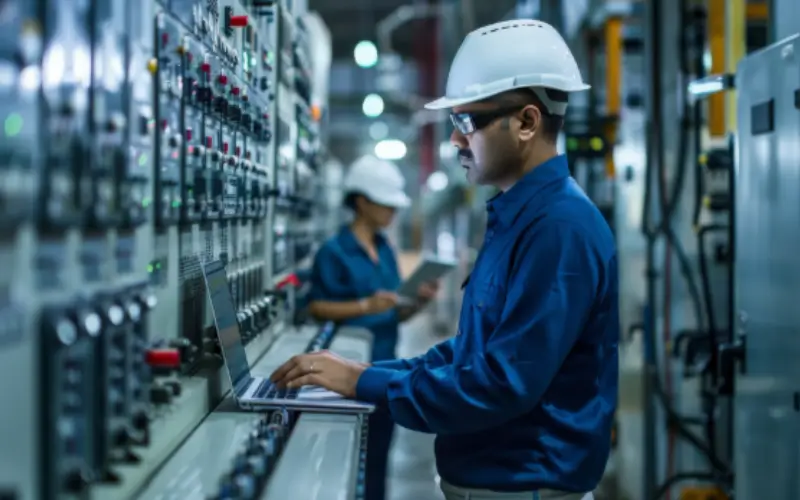
The entire infrastructure of automated manufacturing and industrial facilities is built on a network of precision equipment including sensors, programmable logic controllers, and communication devices. These are sensitive to electrical disturbances, and even a split second of poor power quality can cause them to reset unexpectedly. Sudden interruptions in automated processes can adversely impact production consistency.
How Poor Power Quality Increases Industrial Operating Costs
An expensive electricity bill is the most obvious outcome of poor power quality, but unfortunately it is not the only one. They can silently eat into a company’s revenue, affecting its bottomline by impacting maintenance, production, equipment replacement, and resource utilization. In such cases, early detection and mitigation is highly financially valuable.
Equipment Failures and Unplanned Maintenance Expenses
When power quality suffers, machines feel the heat. Quite literally. This increased thermal and electrical stress on motors, transformers, cables, and other sensitive electronic equipment can lead to faulty machine behaviour. Over time, excessive stress can pile up and accelerate component deterioration. Machine failures are only a matter of time, and as we all know, replacements are expensive. Since harmonics are the primary cause of equipment overheating, facility managers should target them first.
Production Downtime and Reduced Operational Efficiency
Trips, resets, and inconsistent machine performance are all results of electrical disturbances. Unfortunately, even short interruptions can bring production to a halt. Connected manufacturing processes suffer and production workflows become hard to restore. Restarting equipment is the only way left to resume production, but by then valuable time and resources are already lost.
Energy Losses and Higher Electricity Costs
The fact that harmonic distortion increases current consumption is quite well known. Higher than usual machine operating temperatures can further increase energy losses. Not to mention, inefficient equipment operation is also likely to create additional energy demands to maintain production as is.
Long-Term Financial Impact on Industrial Operations
Recurring electrical issues push maintenance budgets beyond their limit. Especially as equipment lifespan shortens and production capacity dips as these are problems that cannot be brushed under the carpet. They need to be fixed immediately.
Businesses may also be forced to invest in replacement machinery much sooner than anticipated, driving up operational expenses further. Needless to say, such unpredictability can affect a company’s bottomline.
The Role of Harmonic Mitigation in Improving Industrial Power Quality
Rising operational costs should be taken as a wake-up call. Businesses must devise effective strategies to fight harmonic distortions. However, mitigation strategies will depend on their facility’s equipment type, electrical network, harmonic levels, and operational requirements.
Identifying Harmonic Distortion Through Power Quality Assessments
Using specialized analyzers to measure voltage, current, total harmonic distortion, and other electrical parameters, power quality assessments reveal exactly where the problem lies. Engineers can use these measurements to understand how electrical conditions change under different operating loads and how they can be managed.
Active, Passive, and Hybrid Harmonic Filtering Technologies
Using technology to manage harmonic distortion is probably one of the smartest things business can do to restore electrical efficiency. Industrial facilities must evaluate harmonic mitigation solutions in UAE to understand which harmonics filtering technology suits their operational requirements. This can help them improve the reliability of their electrical systems while protecting sensitive equipment.
While passive filters can be installed to control specific harmonic frequencies, active filters can monitor electrical conditions and inject compensating currents to tackle harmonic distortions as and when they arise. Hybrid filters combine the features of both and can be used by facilities with heavy non-linear loads.
Improving Equipment Reliability Through Harmonic Mitigation
Harmonic mitigation strategies have a real effect on equipment reliability and operational efficiency. They reduce electrical stress and prevent connected machinery from overheating, thus ensuring stable performance. The risk of power-quality-related failures reduces as well, which means companies can keep their costs under control by saving the extra money spent on emergency repairs and replacements.
Practical Strategies for Improving Power Quality and Reducing Costs
Implementing appropriate harmonic mitigation strategies will automatically result in cost savings, but industrial facilities in the UAE need to do a little more than that to keep their costs under control.
Conducting Regular Power Quality Audits
Period audits can help facility managers catch power issues such as harmonic distortion, voltage variations, and load imbalances in the act. This prevents them from blowing up into major and expensive operational issues later.
Prioritizing Electrical Upgrades Based on Operational Risk
Certain electrical anomalies pose a greater operational risk than others do, which is why it is important to prioritize upgrades accordingly. Fixing high-value equipment that supports critical production processes first keeps costs in check.
Monitoring Power Quality Performance and Maintenance Costs
Ongoing monitoring can help facility managers and engineers identify changes that are behind developing electrical problems. These can then be stacked against existing maintenance records to understand problem-causing patterns, supporting the development of the right mitigation strategies.
Evaluating Long-Term ROI of Power Quality Improvements
While the initial costs of implementing power quality measures may make industrial stakeholders falter, their long-term ROI is more than enough to cover their initial expenses. Benefits such as reduced downtime, fewer repairs, and improved equipment lifespan not only lower energy bills but they also cut down repair and replacement costs.
Conclusion: Building More Efficient and Resilient UAE Industries
If building a resilient electrical infrastructure is the aim, investing in power quality solutions is the answer. It directly influences industrial reliability, energy efficiency and operating costs, helping UAE businesses build the foundation for sustained growth. All they have to do is make power quality management an integral part of their industrial asset management strategies.
Read Also: Dubai Fine Check: Traffic Fines, Online Enquiry and Payment