



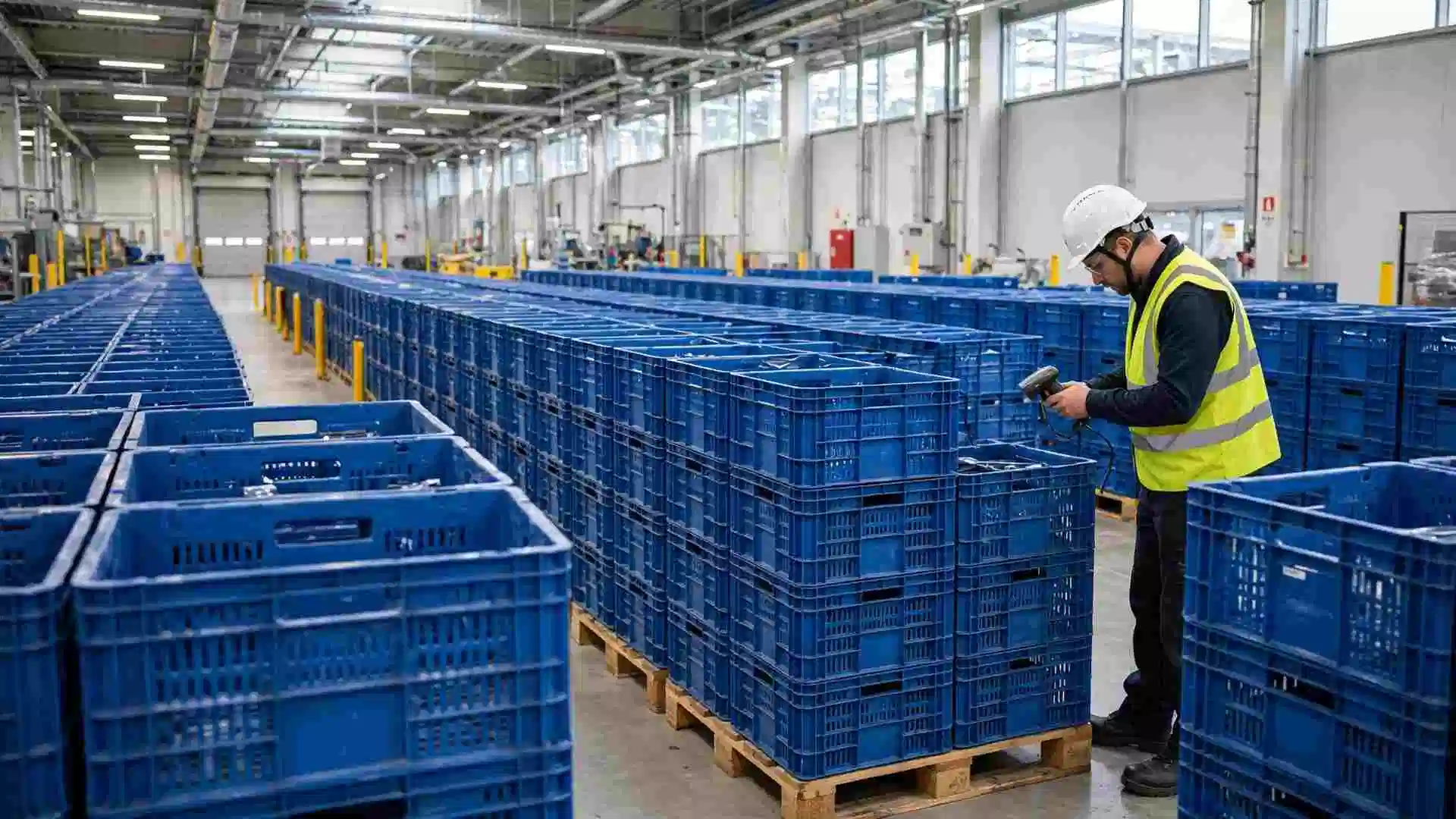



If manufacturers have multiple production facilities, it is possible to face the problem of consistency in packaging. Various crate sizes, handling techniques and return policies can slow work, drive up costs and create challenges with goods transit between locations.
A common packaging system supports all sites in performing the same process and facilitates the flow of product. Manufacturers can establish common packing size and quality rules, select durable packaging, implement stock control monitoring and establish return rules.
Working with Crateco Pack LLC, a plastic crates supplier in Dubai, can help businesses find suitable plastic crates for repeated use across production, storage, and transport operations.
Key Steps to Standardize Returnable Packaging Across Multiple Production Sites
1. Set Common Packaging Standards for Every Site
The first step is to establish one set of packaging rules that apply to all production sites. The rules should include not only the size and weight of the containers, but also the type of material, labeling and handling requirements.
If all sites are consistent with this, the goods can be transported from one site to another without having to distinguish between different containers. This can simplify the storage and transport process.
It also assists purchasing teams in ordering the correct packaging in bulk amounts and thus makes stock management easier and avoids the chance of ordering the wrong packaging containers.
2. Choose Returnable Packaging That Suits Every Site
Returnable packaging should be able to withstand repeated use and retain its strength and shape. The container size, weight, storage and distance of transport should dictate the choice of containers for manufacturers.
Plastic crates can be of great use since they are hard-wearing, easy to clean and come in various sizes and designs. The crates that are selected, however, need to satisfy the requirements of all sites which will use them.
Using a standard container range will minimize the variations of containers between locations and will facilitate sharing of containers when customer demand shifts.
3. Create Clear Rules for Returning Empty Containers
Returnable packaging is successful as long as empty containers go back to the right place at the right time. If there are no specific rules, crates can remain at the customers’ premises, be stored in a loading zone, or be lost during transport.
A standard process for collecting, sorting and returning empty containers to manufacturing should be established.
The process should identify who is responsible for each process step and how often the process returns. There is a shared return system to ensure ample packaging for all locations to operate daily.
4. Use One System to Track Packaging Across Sites
Manufacturers must be able to access the number of crates owned, their location and how many are available for use. Not having the same tracking system across sites can result in incomplete records and ineffective stock planning.
A common tracking system provides managers with a more transparent understanding of packaging throughout the business. It may be used to document the removal, repair, cleaning and return of containers being sent out.
Keeping accurate records enables teams to identify shortages in the system at an early stage and to transfer the spare containers to the required area.
5. Set Shared Cleaning and Quality Checks
During use, returnable packaging can accumulate dust, oil, moisture, or product residue. Containers can be in bad condition when arriving at the production lines if one site follows strict cleaning rules and another doesn’t.
Common cleaning steps should be established by the manufacturer depending on the product being processed and the product’s hygiene and safety requirements. The quality should be checked for cracks, broken edges, loose parts, etc. These checks are used to ensure containers are in usable condition and minimise the risk of product damage due to damaged packaging.
6. Train Workers to Follow the Same Process
The most conservative packaging practices won’t work if the workers are doing different things at each location. Provide clear instructions for staff about how to load, stack, move, clean and return containers.
Training should be conducted to help participants understand the importance of the rules and the consequences of poor handling, such as product damage or lost packaging.
The process should be taught during induction for new members and updated with changes to the rules for existing teams. Increased uniformity of training materials results in a common strategy for packaging management.
7. Plan Packaging Stock Based on Demand
The amount of production and seasonal requirements at each site may be different. A location could be using hundreds of crates per day, or just a few. Before determining the number of containers to maintain in stock for each site, manufacturers should check with the site for demand.
They should also take into consideration the time it takes to return, wipe clean and get empty crates ready for reuse. Good planning will prevent production delays due to stock shortages for packaging and unnecessary purchasing of additional containers.
8. Measure Results and Improve the System
It is an ongoing process to standardise returnable packaging. Manufacturers should evaluate the system’s performance and identify the opportunities to improve it. Some helpful metrics are the number of crates lost, return time, cleaning expenses, damage incidence and packaging expenses per shipment.
It is helpful to compare these site to site as a way of identifying areas of differing procedures and/or additional support. Frequent reviews ensure that managers can base their decisions on actual rather than hypothetical outcomes.
Conclusion
By establishing common rules, selecting appropriate containers, monitoring the inventory and implementing standardized return procedures, manufacturers can create uniform returnable packaging for various production facilities.
The system is reliable with common cleaning, worker training and regular performance reviews as products move between locations. Having a steady process will help eliminate packaging waste, minimize product damage and help manufacturers use their container inventory more efficiently.
Visit Also: Villaggio Hotel & Resort Abu Dhabi: Rooms, Facilities & Complete Hotel Guide