



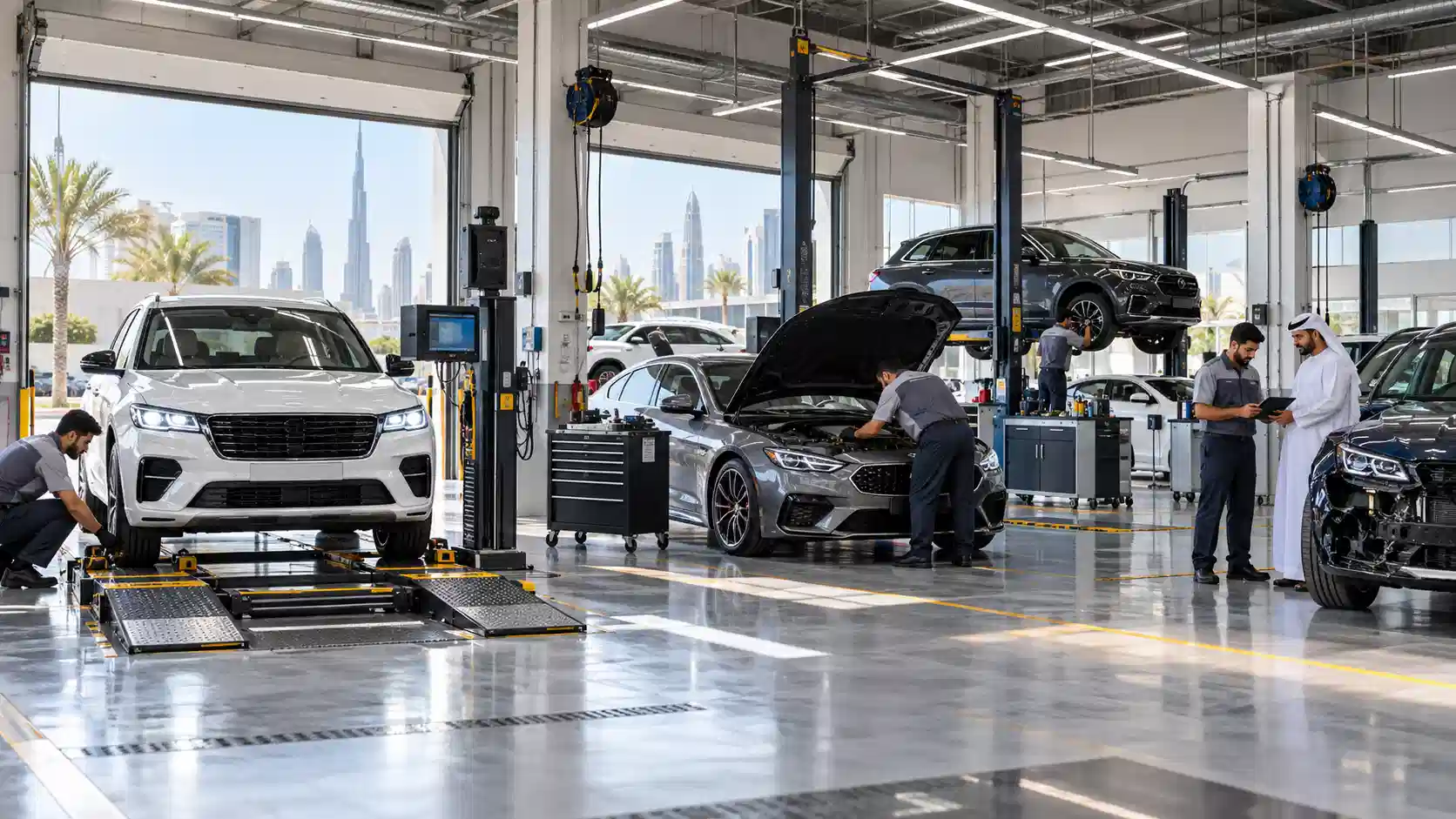




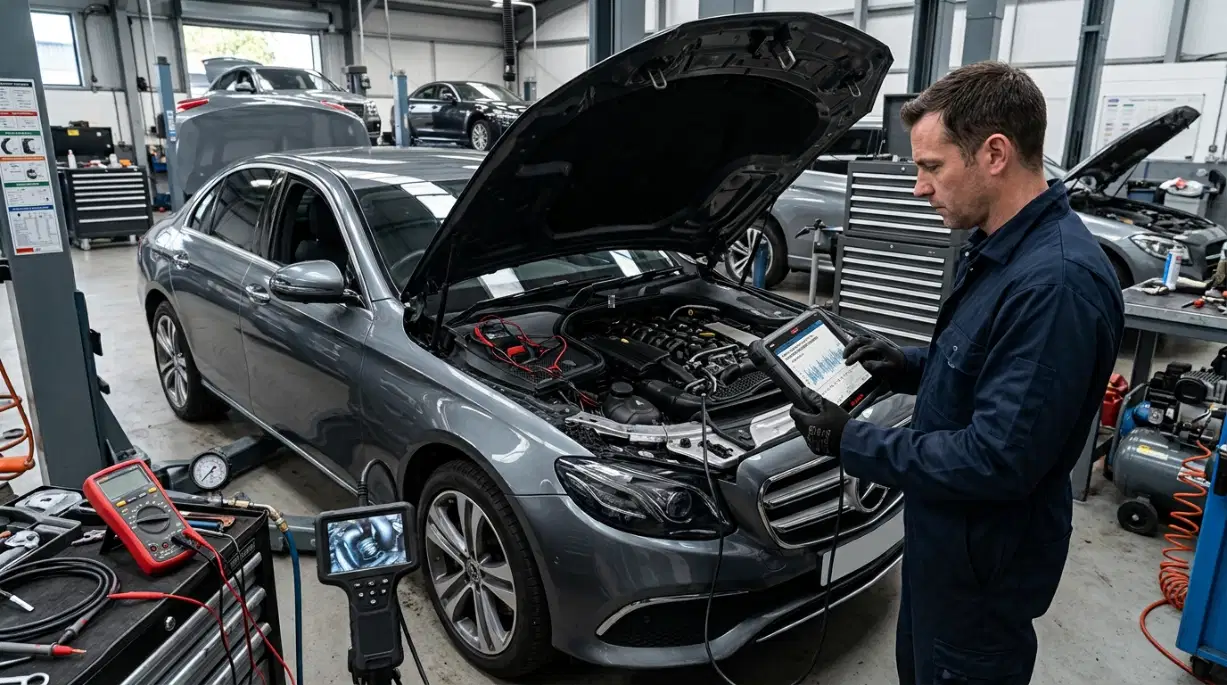
A luxury vehicle can show several warning signs even when only one part has a fault. This is because modern cars use many electronic systems that work together and share information. A problem in one area can therefore create symptoms in another.
One diagnostic method may be required to diagnose more than one fault, as a scan tool might generate a fault code with no exact analysis details.
The technician may also have to inspect the live data, wiring, electrical supply, mechanical parts and the vehicle behavior. Some faults only show up when the engine is running hot, loaded up, or when driving. The use of multiple tests aids in verifying the true cause rather than replacing components based on a code alone.
Why Is One Diagnostic Test Not Always Enough?
Modern luxury cars have a lot of control units, sensors, actuators and communication networks. The systems are constantly communicating to coordinate the engine, transmission, brakes, steering, climate control and safety functions.
If one piece of information is wrong, multiple systems may display corresponding issues. While a diagnostic scan is a good first step, it’s not the end of the road.
A technician providing car repair Abu Dhabi services may need to combine electronic scanning with physical inspection and testing. This helps determine whether the fault comes from the reported component, its wiring, another related part, or a deeper mechanical issue.
1. Diagnostic Scanning Finds Stored Fault Codes
A scan tool can connect with the vehicle’s electronic control units and read out the fault codes that have been stored in them. These codes offer helpful hints on what the car has been doing while running.
They are a potential indicator of sensor, communication, engine, transmission control and other issues. But a fault code doesn’t always indicate that the component named has failed.
For instance, when the wiring is damaged, the power supply is not functioning properly, or the signal is sent incorrectly because of some other issue, then the sensor code can be a result. The code is used to identify the part and make the search easier, but it is often required to perform more tests before replacing the part.
2. Live Data Shows What the Vehicle Is Doing
With live data, the technician can view data from sensors and control systems while the vehicle is operating. This can display data, like engine temperature, air pressure, fuel value, wheel speed, throttle position and more operating data.
These readings can be compared to expected values to identify potential issues that may not be apparent from stored codes. A sensor could be failing, but not show a specific fault code and still report readings that are not representative of the conditions.
A live data display may also indicate when the issue occurs (when the engine is accelerating, normal engine temperature, etc.). This is handy for detecting intermittent faults.
3. Electrical Testing Checks Power and Signal Flow
There are a lot of electrical problems that cause issues in vehicles. Sensors and control modules must have the proper voltage, ground and signal pins for proper function. If the wire is damaged or there is a poor connection, the component may fail to work even if it is in good repair.
Various electrical tests can be performed on the system by technicians, including voltage, resistance, continuity and signal patterns. They can also check connectors for corrosion, missing pins, or moisture.
The checks are important because if the wiring is not fixed, the sensor will not work to correct the problem. Also, electrical testing can uncover issues that a simple scan will not.
4. Physical Inspection Can Reveal Hidden Problems
Some faults can only be detected by a computer. A visual inspection can identify damaged hoses, broken connectors, fluid leaks, loose components, broken mounts, clogged passages and other obvious issues.
Other faults include components that do not fit into the scope of a scan. An engine-related code can occur due to an air leak, but the leak could be in a hose or seal. When examining the physical condition of related parts, the technician can gain another perspective in determining possible causes.
5. Mechanical Testing Confirms Physical Condition
Electronic systems can often be used to track the mechanical condition of parts, but electronic data doesn’t always tell you the truth about an engine or other mechanical part. If pressure or mechanical wear is suspected from symptoms, mechanical testing may be required.
Mechanical readings of compression, fuel pressure, oil pressure, cooling system pressure, or other tests might be performed, depending on the fault.
These tests are used to ascertain whether there is a physical issue causing the electronic warning. They are particularly helpful when the scan results don’t correlate with how the vehicle performs in real life.
6. Road Testing Helps Reproduce the Fault
There are certain problems that may not manifest when the vehicle is parked. A vehicle may idle fine, but have a problem when accelerating, braking, cornering, or driving on the highway. A road test allows the tech to test the vehicle in actual operating conditions.
In a controlled road test, diagnostic equipment can record real-world data as the symptom is occurring. This can be useful for providing a linkage between the driver’s complaint and a particular system or condition.
Road testing can be one of the most helpful steps in diagnosing intermittent failures since it points out the exact moment the issue occurs.
7. Temperature Testing Can Find Heat-Related Faults
A few vehicle parts react differently when they are hot. A sensor, ignition coil, electrical connection, fuel pump, or control module can operate perfectly when it is cold but fail to operate when it gets hot.
If a fault only occurs after a few minutes of driving, the technician may have to test the vehicle while it is warm.
Cold and hot readings can be used to pick up the changes that would not be apparent on just one reading alone. It is particularly effective for intermittent issues, as a car could go through a simple inspection while the suspected part is still cold.
8. Software and Communication Checks May Be Needed
Communication between control units is critical to luxury vehicles. The modules communicate with each other via the vehicle’s communication system.
A communication problem may result in multiple systems reporting faults, while it may only be a single connection or module. Communication fault codes, network connectivity, module status and information related to software can be checked.
A software update or configuration check might be needed in some instances. But software should not be blamed for just a few electronic problems. Before making that determination, however, physical wiring and power supply should also be investigated.
What Does a Complete Diagnostic Process Look Like?
A full diagnosis typically involves a logical sequence of tests and not just a single test. This will vary depending on the particular vehicle and symptoms, but might involve:
- Customer complaint: Understanding exactly what the driver noticed and when it happens.
- Initial scan: Checking stored and current fault codes.
- Visual inspection: Looking for obvious damage, leaks, loose connections, or wiring issues.
- Live data review: Checking sensor and system readings during operation.
- Electrical tests: Confirming power, ground, wiring and signal quality.
- Mechanical tests: Checking physical systems when required.
- Road testing: Reproducing the problem under suitable driving conditions.
- Final confirmation: Verifying that the identified fault matches the symptoms.
In this step-by-step approach, there is no guesswork and no need to replace unnecessary parts.
Conclusion
Several diagnostic methods may need to be used in a luxury vehicle if there is a fault, as these systems are tightly coupled. The scan may give the first indication, but live data, electrical testing, physical inspection, mechanical checks, road testing and temperature testing will provide evidence to confirm the cause.
The objective is not just to get the fault code. It is important to be aware of the reason for that code and whether it is compatible with the actual symptom(s) of the vehicle. Careful selection of the appropriate combination of tests will minimise the guesswork, prevent needless parts replacement and provide confidence that the identified fault is being tackled.
Also Explore: Emarat Bin Hendi: Services, Location, Facilities & Visitor Guide