








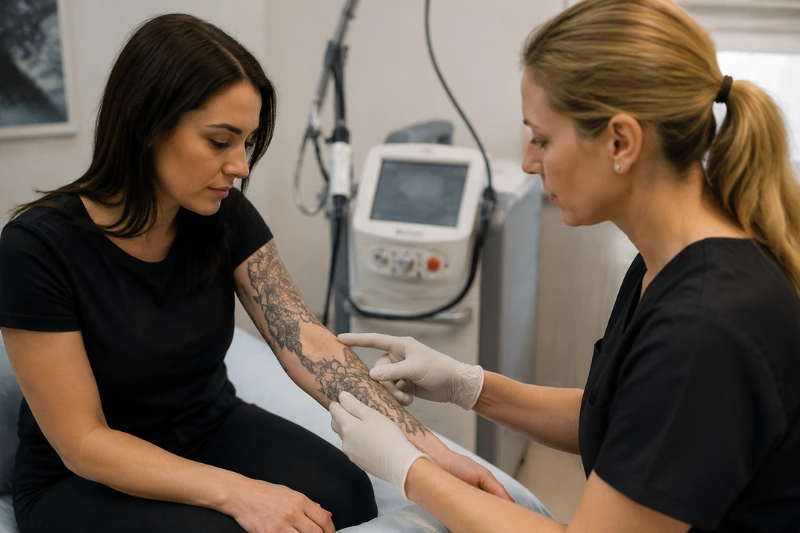
Tattoo removal regret is a frequent occurrence, as is the regret over not selecting the right removal service provider. Your laser tattoo removal results will be directly impacted by the equipment used, the technique applied, and the after-care instructions that you follow. Laser tattoo removal is a medical procedure and is not a quick fix. There are several questions you should consider asking before you schedule a consultation, so you know what you’re in for and who will be doing the work.
What Type of Laser Do You Use?
Lasers and laser devices are not all alike. The lasers used for tattoo removal have long been the Q-switched Nd: YAG lasers, which can be used to remove multiple colors of tattoo ink by using them with different wavelengths, usually 1064nm for dark ink and 532nm for red and orange. Newer picosecond lasers disassemble the particles in the ink with even greater energy in shorter bursts of power, and in some cases, fewer sessions are required.
Inquire about the type of laser used and why. One clinic that will be able to explain the difference between technologies and match the laser to your skin tone and ink colors is a clinic that knows the science, not just how to run a machine.
How Many Sessions Will This Realistically Take?
If someone guarantees complete removal after 2 to 3 sessions, they’re raising a red flag. Generally speaking, the number of sessions needed is between 6 and 12, and they are spaced out 6 to 8 weeks apart, depending on the density, color, depth of the tattoo, and the age of the tattoo. A simple tattoo in one colour tends to fade quicker than a professional piece made up of many different colours and saturated to the max.
A reputable vendor will provide you with a range, based on the actual look of your tattoo, and not a figure plucked from a price list. If anyone promises you a definite timeframe before you even check out your skin, be careful.
What Are the Risks and Side Effects?
All laser treatments involve some risk, and blisters, temporary pigment changes, scarring, and infection (if aftercare is not properly followed) are all potential laser treatment side effects. A competent practitioner should discuss these options with you in an open and transparent manner, and not gloss over them in order to make a sale.
If complications are possible, ask them about how they deal with them. Do they have post-treatment visits for free if you have a reaction to your skin that you do not expect? How seriously they take patient safety vs. turnover is revealed in their answer.
Who Is Actually Performing the Procedure?
The laws governing who can run a tattoo removal laser differ in many areas, and not all tattoo removal parlors will have a nurse, dermatologist, or trained laser technician on board. Inquire straight to the person holding the gadget about his or her qualifications. This is important because settings, pulse duration, and technique must be correct, or scarring or hyperpigmentation may result.
Clinics offering expert laser tattoo removal in Moonee Ponds tend to be transparent about staff credentials, often listing certifications or training hours upfront because they know informed clients ask about it. If a business hesitates or deflects this question, treat that as a warning sign rather than an oversight.
How Will My Skin Tone and Tattoo Location Affect Treatment?
The darker the skin tone, the more energy is absorbed by the laser and the greater the risk of pigment changes with incorrect settings. Other body parts, such as fingers, ankles and feet, take longer to heal and do not respond to treatment as readily as, say, the thymus due to their thin skin and limited blood supply.
If the provider asks questions about your skin type, medical history, and tattoo placement, he/she is doing his/her job. If no pricing and treatment plans are provided, the assessment probably wasn’t comprehensive.
What Will Aftercare Actually Involve?
The finishing touches are in aftercare. Ask what to expect in the days following the treatment: redness, swelling, blisters, and scabbing are all normal; however, specific instructions on how to treat them, such as avoiding the sun, not picking at scabs, recommended ointments, etc., will vary depending on the clinic.
If possible, have these instructions in writing and a phone number or contact method in case something is out of the ordinary during healing. Clinics that provide verbal instructions and no means of follow-up after treatment are shortchanging their patients.
What Does This Actually Cost, Total?
Per session pricing may be confusing if there’s no idea of how many sessions will be required. If you’re interested in tattoo removal, request an overall cost based on the size, color, and location of the tattoo, and ask about package deals and payment plans for multiple tattoo removal sessions.
Also inquire about what will take place if the tattoo doesn’t respond to tattooing after multiple sessions. Will there be any changes to pricing, or do you have a flat fee no matter what? This clarity helps to avoid monetary shocks in the middle of care.
These are 8 questions to take with you to any consultation. You’ll be judging the provider’s ability to safely tattoo you, and you won’t be buying a service. The right clinic will not only answer these questions, but they will also ask them.
Must Explore: DPI Test Dubai: Complete Guide to Laser-Based COVID Screening, Process, Cost and Requirements
Aster Clinic Al Nahda Dubai: Healthcare Services for Everyday Medical Needs