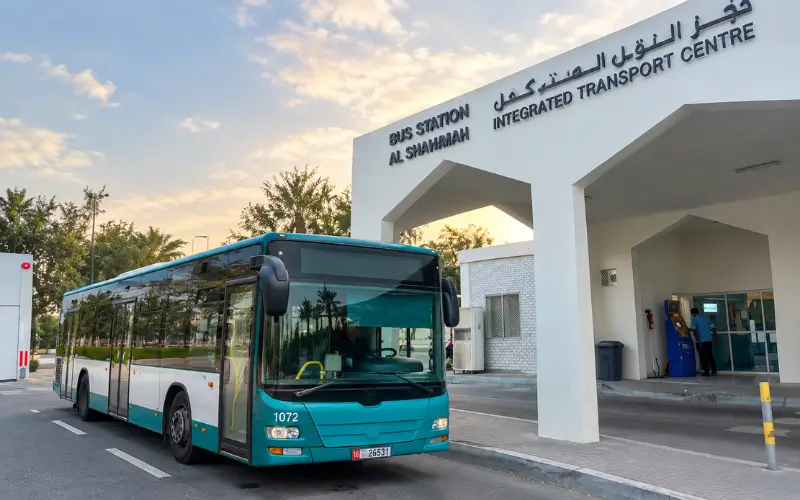


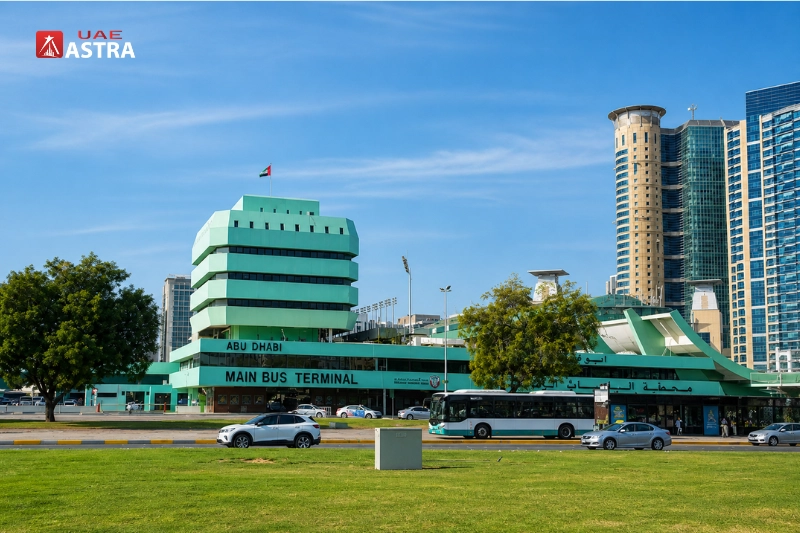
The central place of communication about the public road transport in the capital of the United Arab Emirates is the Abu Dhabi Central Bus Station. It is also where local buses are based in the city center, as well as intercity routes starting at Abu Dhabi and leading to other major destinations like Dubai, Al Ain, and Sharjah.
Being a component of the wider network of public transport in Abu Dhabi, the station forms a critical part in supporting other commuters, long-distance travelers, and visitors seeking affordable and reliable means of transport. The operations are regulated by the Integrated Transport Centre, which is in charge of the transport infrastructure within the emirate.
Location and How to Reach the Station
It is located at the heart of the Al Wahda on the Rashid Bin Saeed Al Maktoum Street and is, therefore, one of the most accessible transport hubs in the city. Al Wahda Mall is a huge local landmark; this has helped visitors recognize the area easily.
Its central location has seen the station well integrated into the Abu Dhabi Bus Network, which means that passengers can access it wherever it is located in the entire city. Several local bus routes directly serve the station, including commonly used lines such as 101, 110, 115, 120, 130, 155, 162, and 56. These paths provide a good level of connectivity between residential and business areas and the transport center.
Taxi and ride-hailing services are essential all day long, and it is a convenient choice when someone has luggage or has come from a faraway area. The roads around it are in good condition, thus accessibility is easy even during traffic time.
Bus Routes and Intercity Connectivity
One of the most important aspects of the station is its role in the intercity bus network in the UAE. It acts as a departure point for multiple long-distance routes connecting different emirates.
Among the most commonly used routes is the E101 bus, which connects Abu Dhabi to Dubai via major stops such as Ibn Battuta and Union. This route is widely used by daily commuters due to its frequency and direct connectivity.
It is another element of the station that is the key part of the intercity bus UAE network. It serves as the departure point of several long-distance routes of various emirates.
The E101 bus, which links Abu Dhabi to Dubai through some of the most frequently visited places such as Ibn Battuta and Union, is among the most commonly used routes. This is a commuter highway, which many commuters use due to its frequency and connectivity.
Other key routes include:
| Route Code | Destination | Notes |
| E100 | Abu Dhabi to Dubai (Al Ghubaiba) | Direct Dubai access |
| E102 | Abu Dhabi to Jebel Ali | Industrial zone connection |
| 117 | Abu Dhabi to Sharjah, Ras Al Khaimah, Umm Al Quwain | Multi-emirate route |
These paths underline the power of transport connectivity in the UAE, where passengers can travel throughout the country without having to rely on personal cars.
Besides large urban centers, a few routes serve a number of emirates in one journey. An example is the route that covers Abu Dhabi to Sharjah, Ras Al Khaimah, and Umm Al Quwain, which provides long-distance connectivity to the passengers passing across the northern parts of the UAE.

Travel Time and Distance Insights
Travel time can be determined based on the distance, type of route, and traffic congestion. Nevertheless, general estimates are a helpful guide towards planning.
| Route | Approximate Distance | Travel Time |
| Abu Dhabi to Dubai | ~140 km | 1.5 to 2 hours |
| Abu Dhabi to Al Ain | ~160 km | 1.5 to 2 hours |
| Abu Dhabi to Sharjah | ~170 km | 2 to 2.5 hours |
| Multi-emirate routes | 300+ km | 4 to 6+ hours |
Routes that travel long distances, traversing through various emirates, might take more than five hours, particularly during the peak seasons.
Bus Timings and Service Frequency
The station is operational 24/7, and being one of the few transport hubs in the UAE, the station offers 24/7 accessibility. Nevertheless, the bus schedules are determined by the route.
Dubai routes are one of the most common routes, and departures occur on average every 20-30 minutes. Other routes might have longer times, particularly such routes that serve sparsely populated areas or those that travel greater distances.
Peak periods are usually in the early morning and evening hours when commuters are driving to work between cities. At such periods, buses can be overcrowded, and waiting time can be a little longer.
Ticketing System and Fare Structure
The station has a simple ticketing system, which is convenient and affordable to the customers. The tickets can be bought at the counters or by the Hafilat card, which is a component of the public transportation infrastructure in the UAE.
The fare is determined according to the miles covered. The short routes of intercity transportation, including Abu Dhabi to Dubai, are normally priced between AED 25 and AED 35, although longer routes come at around AED 60 to AED 100.
I am not sure about the current fares since the prices will vary as time passes. Before travelling, it is advisable to always ensure you inquire about official transport sources before travelling.
A Hafilat card will ensure that the passenger does not carry cash; it will also save time in boarding an airplane. It can be recharged at the Station or other authorized outlets.
Facilities and Passenger Experience
Comfortable Waiting Areas and Seating Capacity
Abu Dhabi Central Bus Station is master planned to accommodate a large number of passengers per day and ensure a comfortable riding experience. Among the most significant ones could be regarded as its air-conditioned waiting areas, which are necessary given the hot climate in the United Arab Emirates.
These waiting halls are large and organized to manage peak hours, especially at the time of travel in the morning and the evening. The seating allocation is spread to various parts, enabling the customers to rest whilst waiting as the bus moves around without having people crammed together. This arrangement not only helps in effective movements of the passengers but also helps reduce congestions that is important to a major intercity bus terminal in the UAE.

Essential Passenger Amenities and Services
The station has a series of facilities that enhance the overall passenger experience in the Abu Dhabi transport system. Accessibility and cleanliness are promoted in all service locations.
Passengers have access to:
- Well-maintained restrooms
- Committee ticket offices to make inquiries and bookings.
- Foreign food establishments, such as small cafeterias, which sell snacks and beverages.
Probably one of the most useful features is free Wi-Fi, which can be used during waiting time as a traveler needs to stay connected, check schedules, or work during waiting time. This is of great help to long-distance travelers and everyday commuters who need the real-time information.
The station has also installed ATMs inside the premises, which offer easy access to funds without the need to leave the premises. All of these services contribute to a higher level of usability of the public transport infrastructure in Abu Dhabi.
Prayer Areas and Cultural Convenience
The station has its own prayer rooms to cater to the religious and cultural demands. These rooms are cheap, silent, and readily available; as a result, passengers can conduct prayers in these spaces without any inconvenience.
This attribute is indicative of the design philosophy of transport infrastructure in the UAE, whereby facilities are designed to address both practical and cultural needs of the users.
Accessibility and Inclusive Travel Features
Accessibility is an important aspect of designing the station. The transport hub is better integrated with the challenge of passengers facing difficult mobility, which makes it a more universal transport hub.
Key accessibility features include:
- Ramps and doors that are wheelchair accessible.
- Helping assist older passengers.
- Well-identified signage to aid convenient navigation.
These factors will ensure that the station can be used by all passengers, irrespective of their physical capabilities, which is in line with the current standards of urban mobility in Abu Dhabi.

Nearby Hotels and Accommodation Options
Hotels Within Close Proximity
There are several hotels that are well known and are all located not far apart from the Abu Dhabi Central Bus Station. These include:
- Villaggio Hotel
- Royal Rose Hotel
- Beach Rotana
- Ramada Downtown
These hotels are also able to provide options in terms of short-term stay as well as longer stay.
Convenience for Travelers and Tourists
Accessibility of accessible accommodation is also very convenient to the passengers who arrive late at night or those who are leaving early in the morning. Rather than taking the bus to reach a certain point within the city, visitors can always be near the station and have easy access to transport services.
In the case of a tourist, their travel arrangements are also made easier by the ability to be close to a major transport hub (Abu Dhabi). It enables one to access intercity buses, local transportation, and activities nearby without spending a lot of time commuting.
Nearby Landmarks and Key Locations
Shopping and Entertainment Options
Al Wahda Mall is one of the most noticeable buildings that one can see near the station. It has a huge concentration of retail outlets, restaurants, and entertainment centers, such that it serves as an ideal tourist destination for visitors either on their way to a destination or after they have reached the destination.
This is because the overall worth of the location is improved with transport connectivity in the UAE and with lifestyle amenities.
Sports and Recreation Facilities
Al Nahyan Stadium is close to the Al Nahyan Stadium, which is a sports venue. Football matches and other activities take place in the stadium where both the locals and tourists gather.
Such proximity provides another dimension to the area, as it is not only a place of transit.
Coastal and Tourist Attractions
Corniche Beach is one of the most desirable locations in Abu Dhabi, and this is for those who would like to get to the depths of the city. It boasts of a scenic waterfront, walking paths, and recreational facilities, making it a very relaxing venue after travelling.
The easy accessibility of these places by the station depicts the strength of the public transport in Abu Dhabi, as passengers will easily access them and transition smoothly between travel and leisure.
Travel Tips for a Smooth Journey
To make the best out of your travelling experience, it may be helpful to consider some practical tips:
- Arrive early to avoid last-minute delays
- Use a Hafilat card for quicker transactions
- Travel during off-peak hours for more comfort
- Keep personal belongings secure
These minimal steps may make an immense difference in the overall journey.
Conclusion
The Abu Dhabi Central Bus Station is a crucial element of urban movement in Abu Dhabi, where there are good transport services, reliable transport, affordable transport, and well-connected transport. The prevailing location, network of routes, and comfort facilities for the passengers make it a critical hub for both the locals and the tourists.
Whether it is short-distance intercity travels or long-distance trips covering several emirates, the station offers an all-encompassing and efficient traveling solution within the developing and growing transport network in the UAE.
Explore Also: Expo Metro Station Dubai Travel Guide – Route, Timings & Fare
Frequently Asked Questions
Where is Abu Dhabi Central Bus Station located?
It is found in Al Wahda on the Rashid bin Saeed Al Makstan street bordering the Al Wahda Mall.
Which buses go to the station?
Routes such as 101, 110, 115, 120, 130, 155, 162, and 56 connect different parts of Abu Dhabi to the station.
What is the fare from Abu Dhabi to Dubai?
It normally costs between AED 25 and AED 35, depending on the service.
Are buses available 24 hours?
The station is indeed 24/7; however, schedules are dependent on the route.